

Green Scene pours and finishes concrete for homeowners and commercial customers around Franklin: driveways and walkways, patios and steps, pool decks, and custom stamped work. Every job comes down to one of four finishes (slick, broom, exposed aggregate or stamped), and each suits different ground.
So the first question isn’t about color or pattern. It’s about use. Will the surface be driven on, walked on barefoot, hosed down after the dog, or mostly looked at? Answer that and the finish usually picks itself.
Which concrete finish should you choose?
| Finish | What it’s like | Where it goes |
|---|---|---|
| Slick | Smooth and easy to clean; it takes a little longer to finish | Garages, porches, patios, warehouses and other business floors |
| Broom | A brushed, rougher texture that grips far better when wet | Around pools, and on patios |
| Exposed aggregate | Pea gravel or river stone in the mix, showing at the surface | Driveways and patios, where it’s probably the most popular choice |
| Stamped | Pressed with a stone, brick, wood or custom pattern | Walks, patios and anywhere you want the look of pavers |
Limestone is the stone mostly used in slick and broom work. The aggregate finish swaps it for rounded pea gravel and river rock, which is exactly what you see once it’s done.
How is exposed aggregate concrete made?
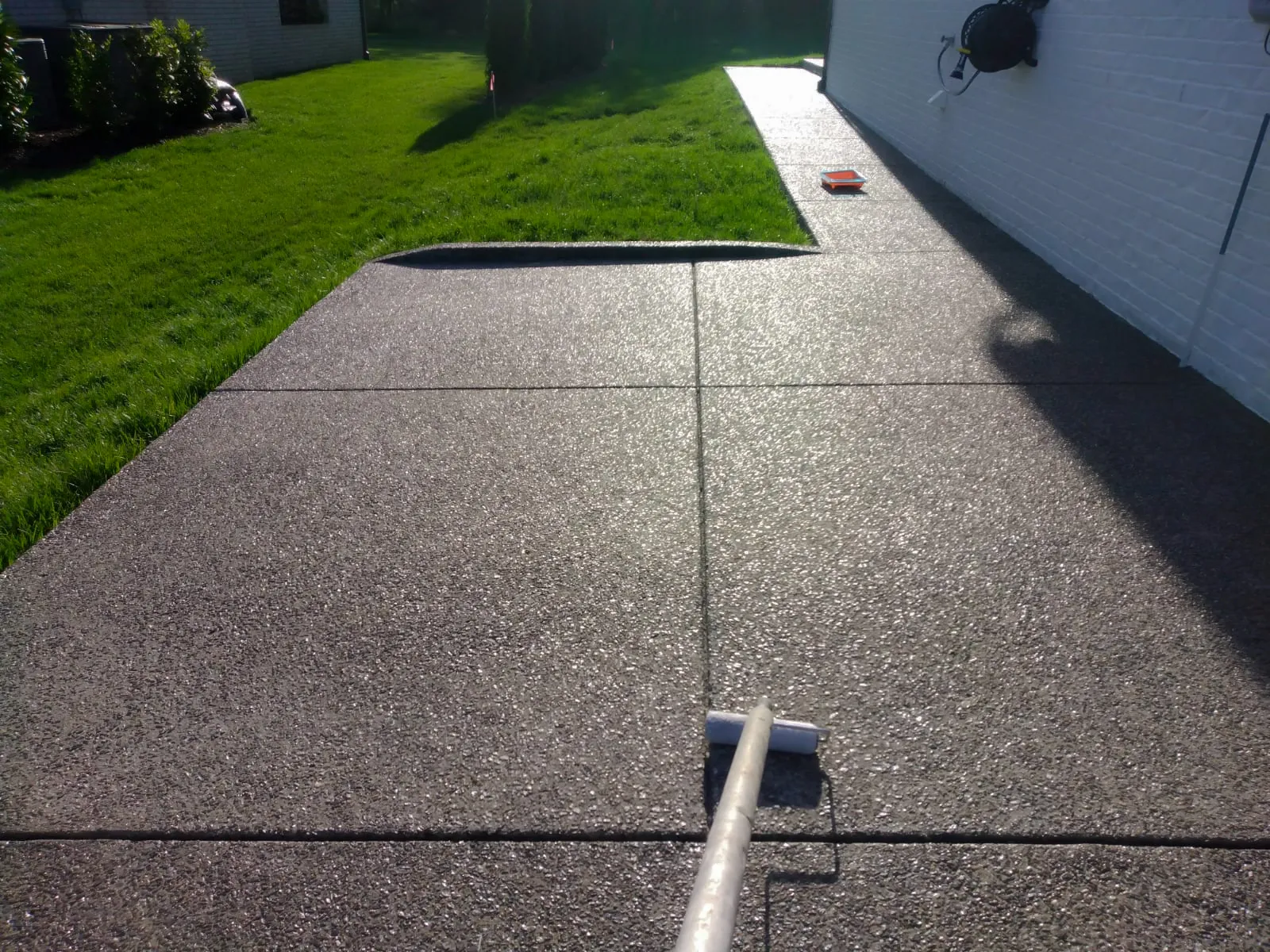
It’s poured like any slab, with pea gravel or river stones in the mix. Once it’s placed, the crew treats the surface with a chemical retardant that keeps the top skin from setting as fast as the concrete below. Then they wash and brush that thin layer away, and the rounded stone underneath comes into view. The walk at the top of this page, running beside a painted brick house, was finished that way.
On driveways and patios it’s probably the most requested of the 4. You get texture underfoot and the look of natural stone, from a surface that’s still poured in one piece.
Is stamped concrete a good alternative to pavers?
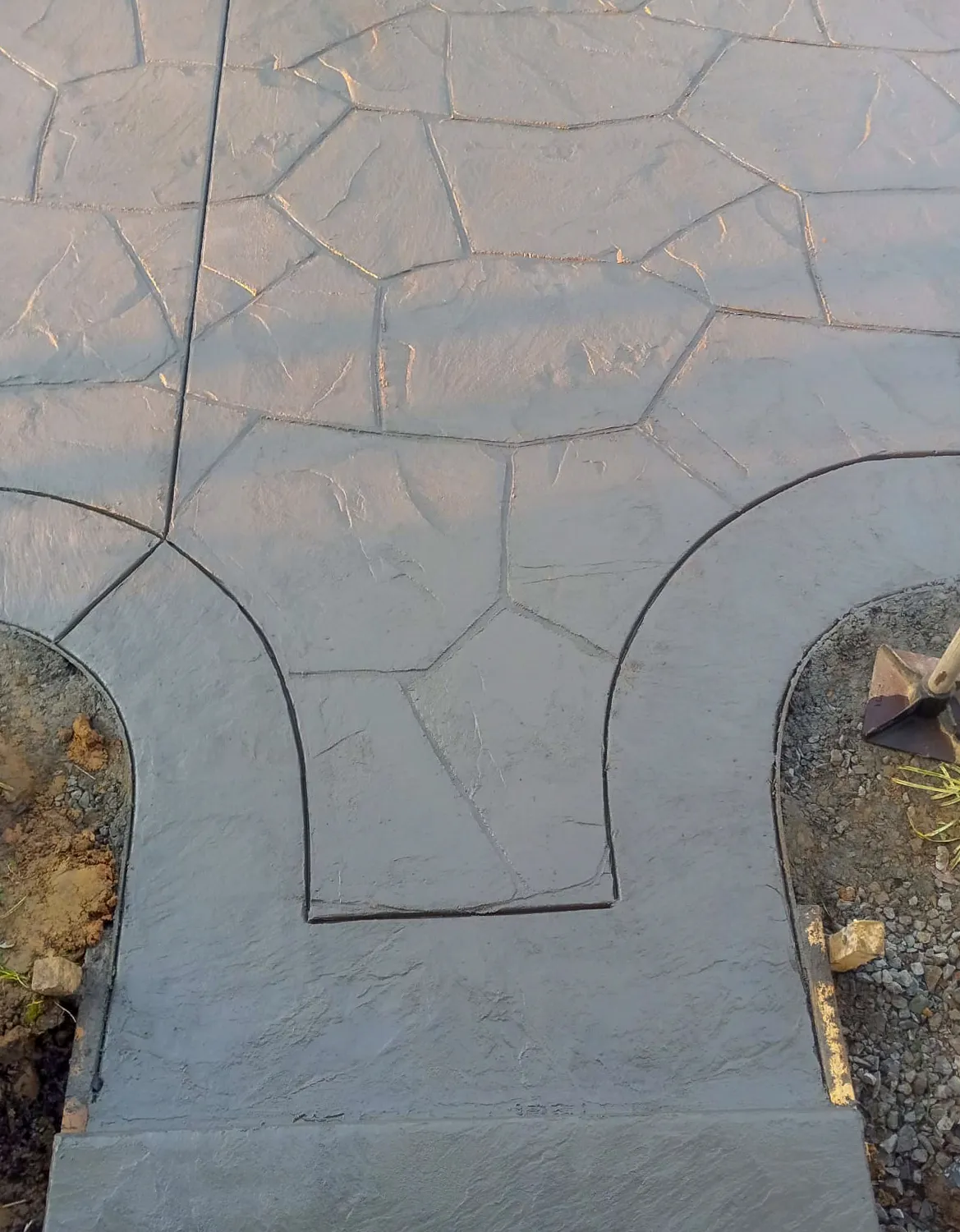
For a lot of budgets, yes. Stamped concrete is poured as a single slab and pressed with a pattern while it’s still workable, so you get the look of flagstone, brick or wood plank for a fraction of what brick pavers cost. Green Scene stamps standard patterns and custom designs.
The difference is in how each is built: pavers are separate pieces on a compacted base, and stamped concrete is one continuous surface. If you’re weighing the two for a patio, the paver patio and hardscape page explains the paver side, and Jose Garcia can price both at the same visit.
What concrete work does Green Scene do?
- Driveways and walkways
- Patios and steps
- Pool decks, often broom-finished for grip (the pool deck page compares concrete with pavers)
- Custom stamping
- Commercial floors and slabs where a smooth, cleanable slick finish fits
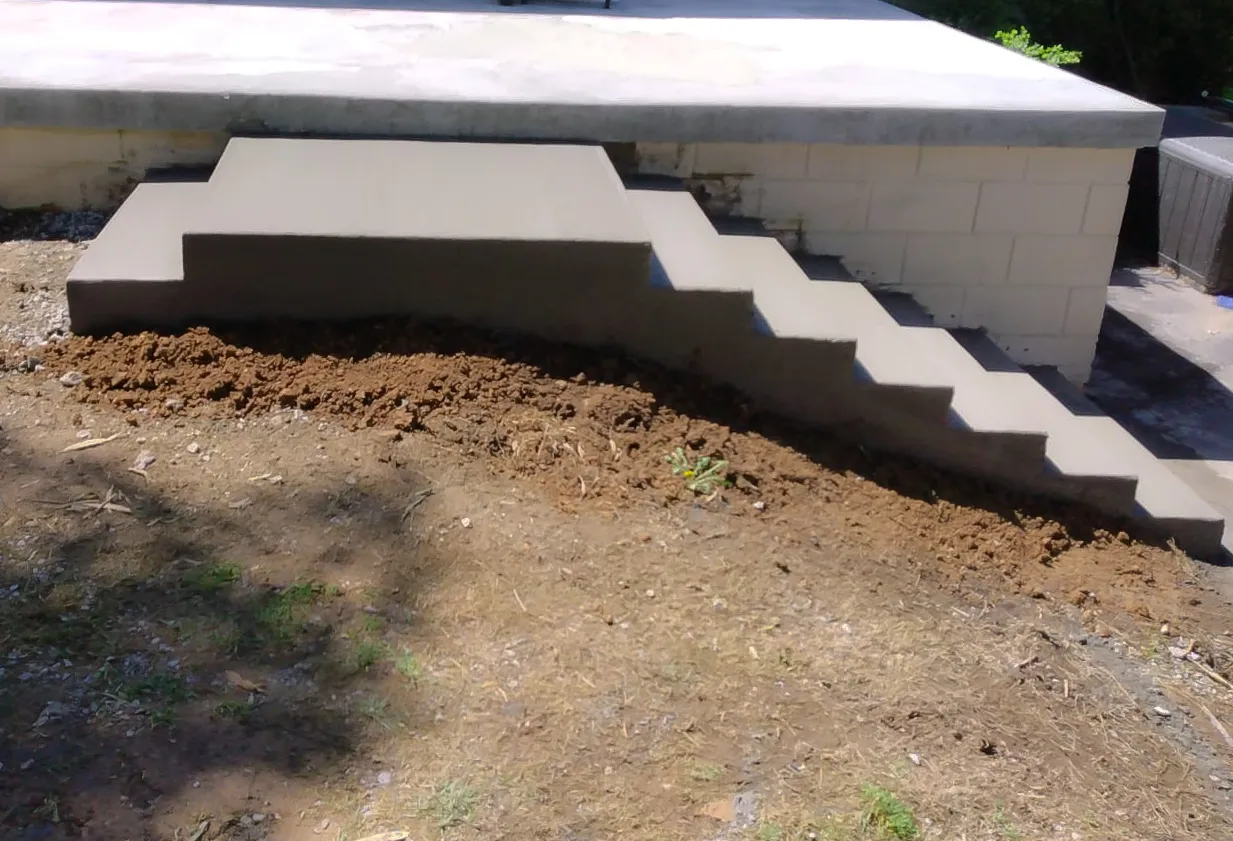
Steps show why the finish isn’t the whole job. The set in the photo was formed and poured against a block wall up to a porch slab, and every tread has to come out the same height, or someone catches a toe on the one that doesn’t.
How does a concrete job get priced?
Jose Garcia measures on site and writes it up, and the estimate is free with no obligation. The size of the pour, the finish, any stamp pattern, and how much ground has to be dug out or built up first all move the number. Commercial customers get the same written estimate as homeowners.