

(615) 585-0280 Monday–Sunday, 7 AM–6 PM 431 Mealer Street, Franklin
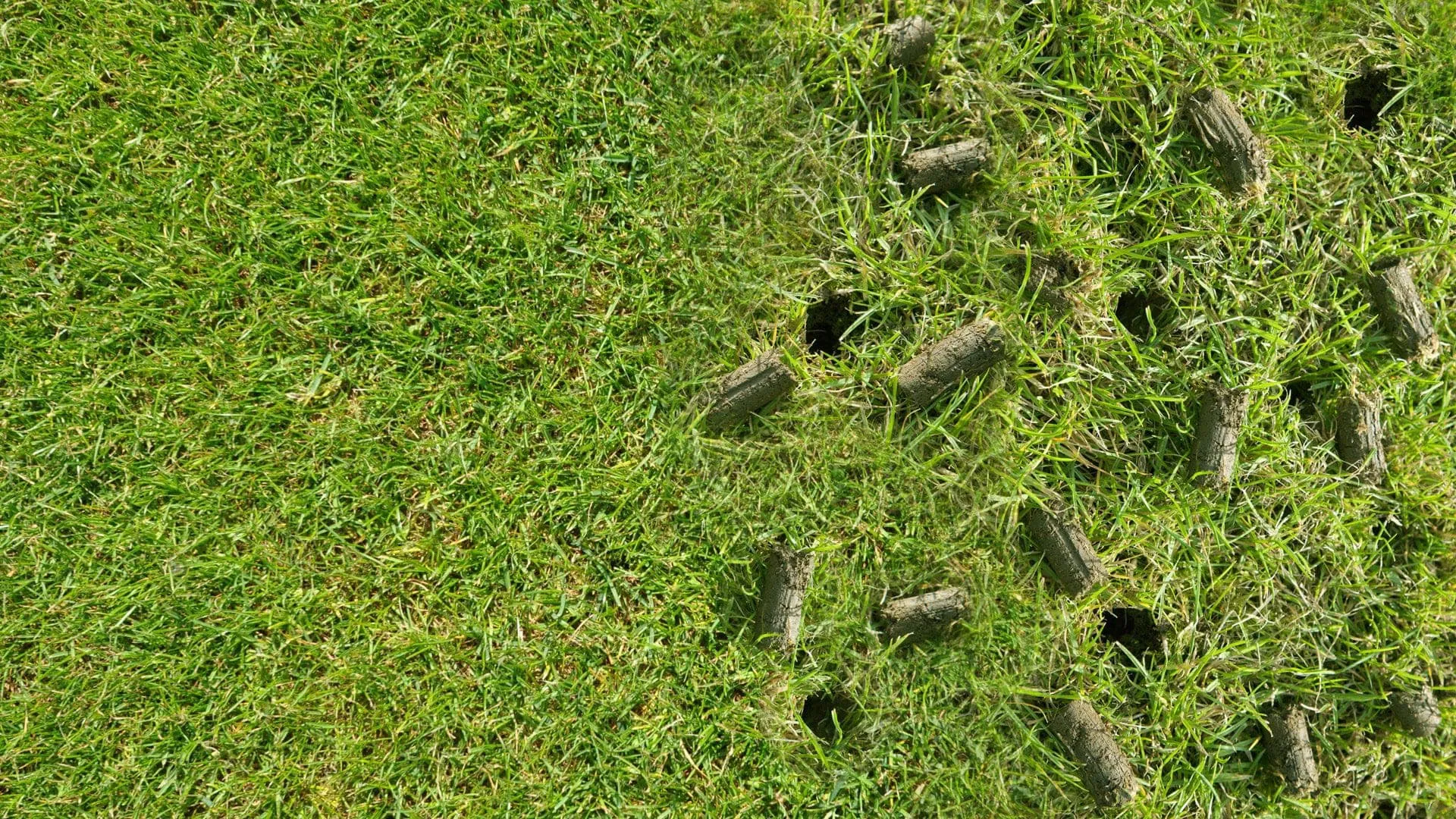
Soil plugs scattered across a green lawn after core aeration

Aeration

Core aeration for clay the builder packed down

Most lawns here grow on clay, and on newer lots that clay was graded and driven over before the sod went down. Pulling cores is how air, water and fertilizer get back to the roots.

Free written estimate

Tell us what the yard needs. The office calls back to set up a visit.

What happens to your message: privacy policy.

Core aeration pulls thousands of small plugs of soil out of a lawn, up to 3 inches deep, and leaves open holes where water, oxygen, seed and fertilizer can reach the roots. Green Scene does it once a year with professional aerators, timed to the type of grass, and pairs it with a planned fertilization schedule.

Compaction is a problem in just about every lawn, and the worst of it is under sod a builder laid on a new lot. Established yards gain from it too, where thatch has built up or a dry summer has opened bare spots.

Why does builder sod struggle on a new lot?

Because of what's under it. To finish a house, builders grade the lot and roll fresh-cut sod over clay that heavy equipment and leftover building material have packed hard. Roots can't push into that. Plenty of that sod barely makes it through its first year, and the lawns that survive tend to stay patchy and slow.

No amount of water or lawn chemicals fixes soil like that. Opening it up does, and core aeration is the first step. When the ground is too far gone even for that, the Harley rake strips the old lawn and rebuilds the seedbed.
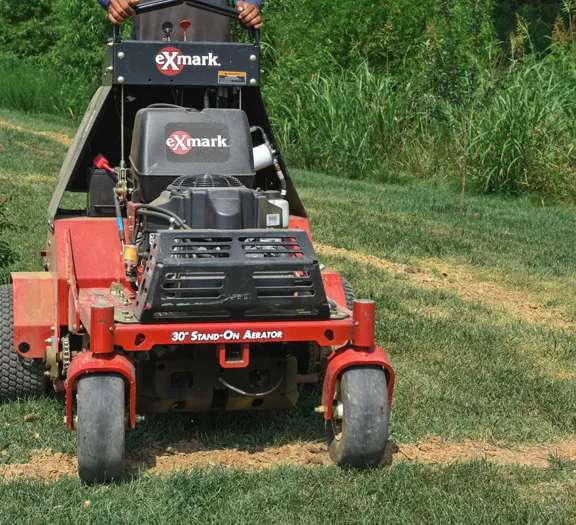
A walk-behind core aerator parked on a lawn with soil plugs lying behind it
A professional core aerator, built to reach down into compacted clay.

What happens to the lawn during core aeration?

The machine punches hollow tines into the turf and lifts out plugs of soil, row after row, leaving the yard dotted with small holes and the plugs lying on top. The plugs look messy for a short while. Leave them: each carries microorganisms that help break down the thatch layer as it crumbles back in. Over the following weeks the lawn gets:

  • looser soil where the clay had sealed up
  • more oxygen at root depth
  • water and nutrients that reach the roots instead of running off
  • more of the organisms that eat thatch
  • deeper, stronger roots overall

What does aeration and overseeding look like?

Green Scene filmed this on one of its own lawns in 2024: the aerator working the yard, then the seed going into the fresh holes.

Why not rent an aerator for the weekend?

Any aeration does some good, but many retail aerators can't drive deep enough into clay to matter. A shallow pass pulls little more than turf and leaves the packed layer where it was. Green Scene runs professional equipment, operated by trained lawn crews, and they work the sloped parts of the yard as well as the flat.
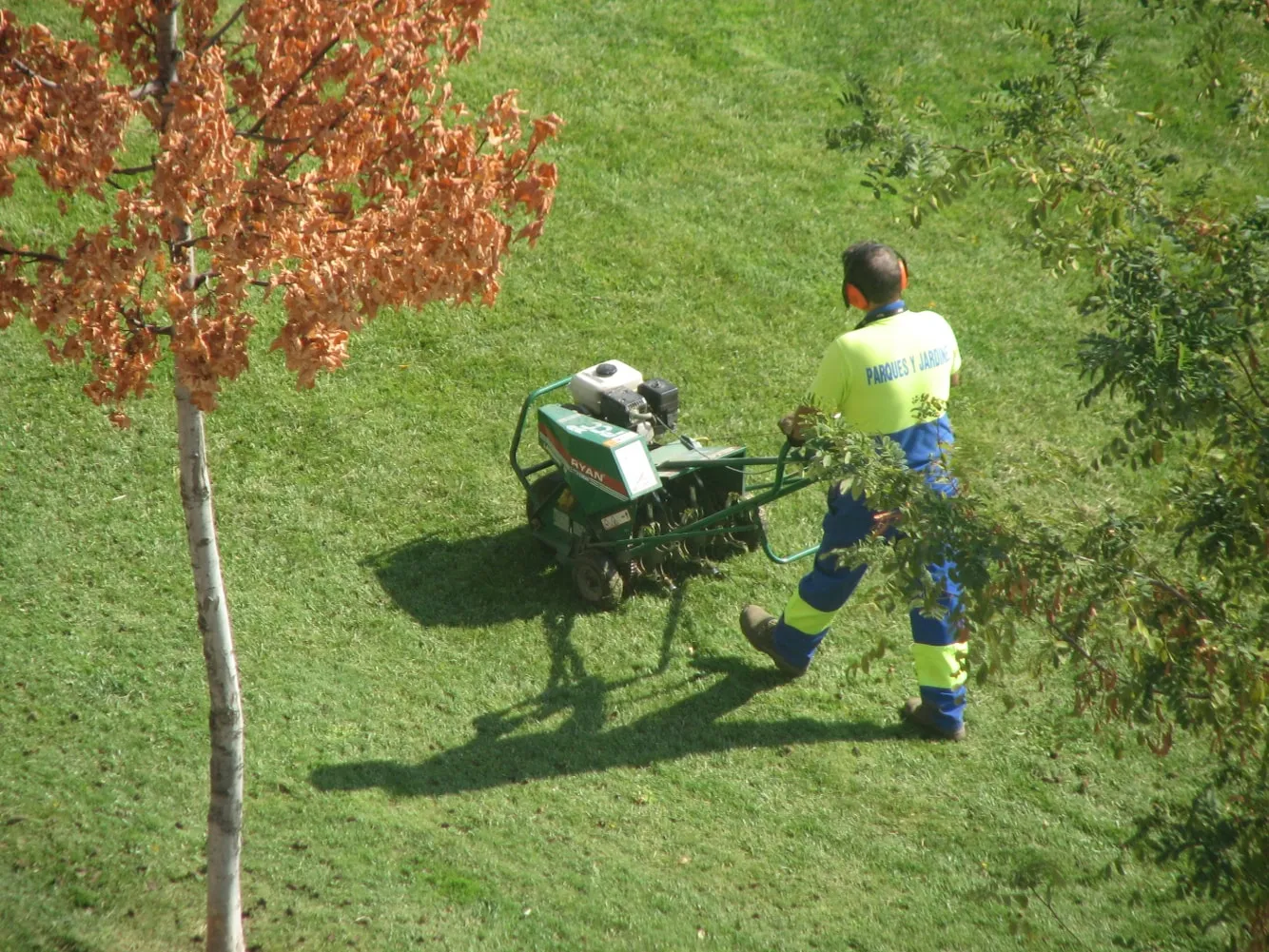
A Green Scene crewman running a core aerator across a sloped lawn beside a house
Slopes get aerated too, not just the easy flat ground.

When should fescue, bermuda and zoysia be aerated?

It depends on the grass, and on the soil being moderately moist, neither dust-dry nor soaked. For tall fescue, rye and Kentucky bluegrass, fall is best; very early spring works but isn't ideal. UT Extension's 2024 lawn calendar puts aerating and overseeding tall fescue in August. Bermuda and zoysia benefit any time during their spring and summer growing season.

Where does the fertilizer come in?

Right after. The cores leave a path straight down to the root zone, so fertilizer applied on a planned schedule goes where the grass can use it. Green Scene builds the aeration and the feeding into one yearly plan for your lawn. On fescue, that same visit is the natural time to overseed, since the seed drops into the holes.

Answers

Core Aeration & Fertilization questions

Is core aeration worth it on a new-construction lawn?

Yes, it is often the most useful thing a new lawn can get. Builders tend to lay sod on graded clay packed hard by equipment and debris, and water or chemicals can't fix that. Core aeration opens the soil so roots, water and fertilizer can get down, and Green Scene pairs it with a feeding plan.

How deep does Green Scene core aerate a lawn?

Up to 3 inches. Green Scene uses professional aerators that pull thousands of soil plugs and leave cavities that deep, which is far enough to break through compacted clay. Many retail aerators can't penetrate that far, so a rented machine often just scratches the surface of a Williamson County lawn.

Should I rake up the plugs after core aeration?

No, leave them where they fall. The soil plugs look untidy for a short time, but each one carries microorganisms that help decompose the thatch layer as the plug breaks down. So the plugs stay on the lawn and break down where they are, which is part of the treatment.

When is the best time to aerate a tall fescue lawn in Middle Tennessee?

Fall. Tall fescue, along with rye and Kentucky bluegrass, responds best to fall aeration, and very early spring is a weaker fallback. UT Extension's 2024 lawn calendar lists August for aerating and overseeding tall fescue. Green Scene schedules fescue aeration in that fall window, usually with seed.

Can you aerate a bermuda or zoysia lawn in the summer?

Yes. Bermuda and zoysia are warm-season grasses, and core aeration helps them at any point in their spring and summer growing season. Green Scene fits warm-season aeration into that stretch and times it so the soil is moderately moist rather than baked dry.

Is a rental aerator from a home store good enough for clay soil?

Usually not. Some aeration is better than none, but many retail aerators can't drive deep enough to break up compacted clay, so the hard layer stays put. Green Scene uses professional equipment that reaches up to 3 inches, run by trained lawn crews.

Does the soil need to be wet for core aeration?

Moderately moist is best. Dry, baked clay resists the tines and gives shallow cores, while soaked ground turns to mud. Green Scene times aeration for when the soil has some moisture in it, so a long dry spell can push the date back a little.

Free written estimates

Tell us about the yard

A sprinkler system, a patio, a lawn that never took. Call the office or send the form and we will set up a visit.

Call Request an estimate