

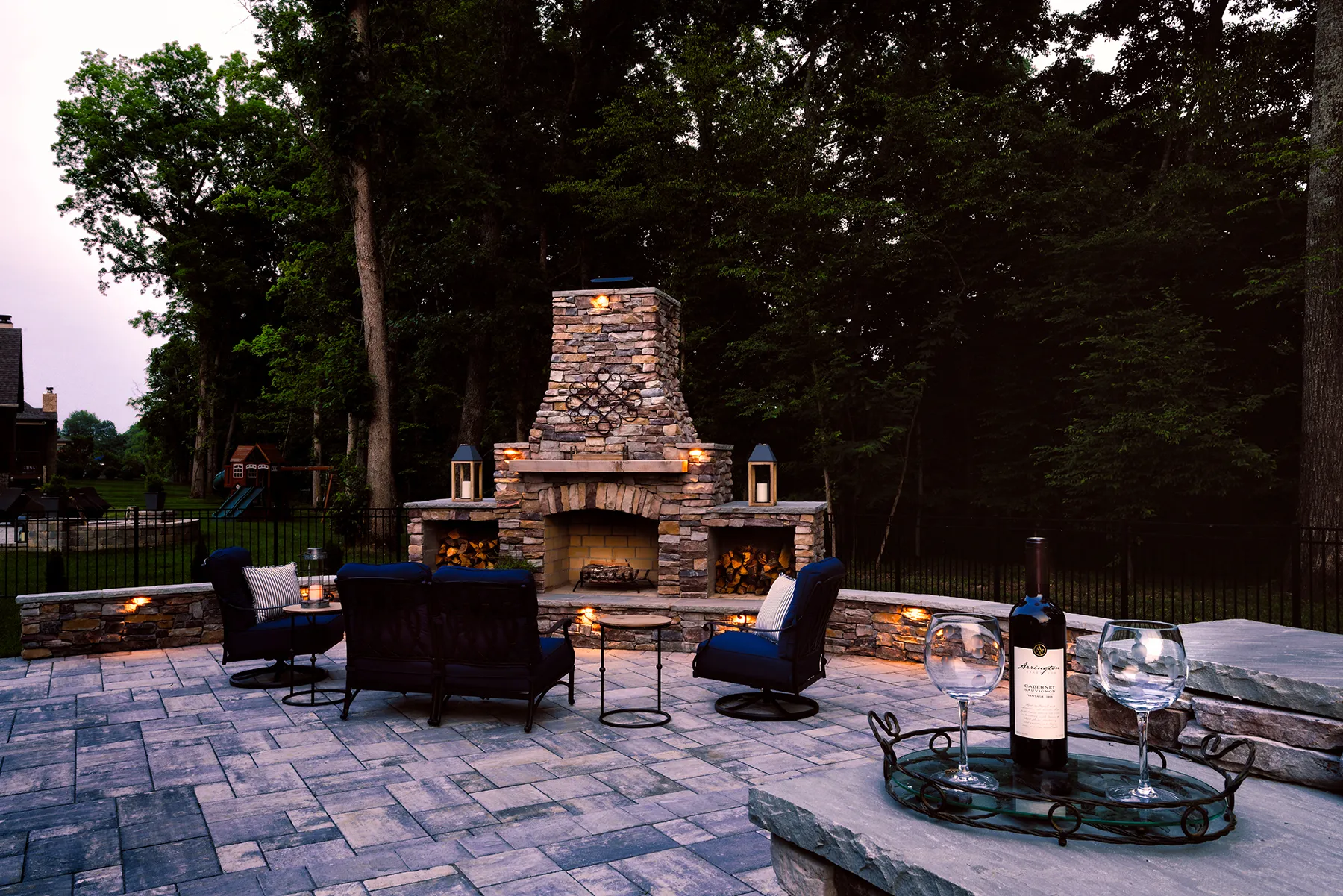
Hardscape is the part of a yard that’s built rather than grown: paver patios, walkways, retaining walls, outdoor grills and cooking areas, fire pits and fireplaces. Green Scene designs and builds it for homeowners in Franklin and the rest of Williamson County, and most of it is interlocking concrete pavers set over a compacted, leveled base.
It’s for the yard where you want to sit, cook or walk without tracking through mud. Getting there takes an on-site visit, a plan (yours, or one Green Scene draws), a written price, and a crew willing to spend its first days on ground you’ll never see again.
Why does the base under a paver patio matter so much?
Pavers stay flat only as long as the ground under them does. A lot of Franklin lots sit on clay that the home builder graded and packed down, often on a slope, and a patio laid straight onto that can sink, heave or hold puddles within a few seasons.
Green Scene’s own rule is blunt about it: “step one is always stabilizing and leveling the construction area with the proper base material. It’s not an option.” So the crew builds up and compacts that base and checks its level and pitch before the first paver goes down. Once the job’s finished you’ll never look at that layer again. It’s still the reason the patio holds its shape.
How do drainage and existing trees shape the design?
They come first. Before anything is drawn, Green Scene walks the property to see how water crosses it and what’s growing near the work, because a new patio changes where runoff goes. Set one at the foot of a slope with no plan for that water and it turns into a shallow pond after every hard rain.
Trees can need paperwork. Belle Meade requires a permit to remove any tree over 4 inches in diameter (Ordinance 2019-11), and Forest Hills requires one for most tree removals, so a patio that needs a tree gone gets that settled before the plan is final. When the beds around the new stone need work too, a landscape design can put the hardscape, the plantings and the lighting on one drawing.
What can a hardscape project include?
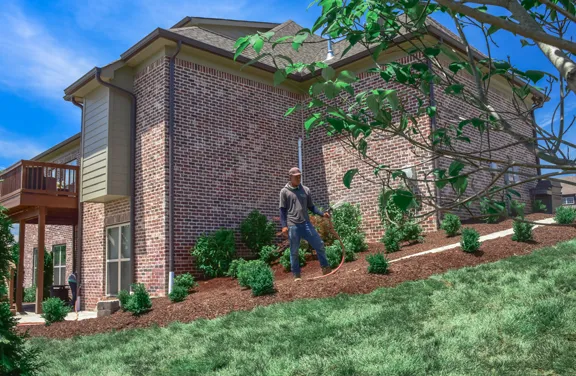
Most start with one piece and grow. What Green Scene builds:
- Paver patios, from a small sitting area to an entertaining space, with or without the covered structures on patios and pergolas
- Paver walkways, short or long; for Dr. James Hardie the crew laid one from his house to his daughter’s home next door
- Retaining walls where a slope needs holding back
- Outdoor grills and cooking areas
- Fire pits and masonry fireplaces, covered in detail on fire pits and outdoor fireplaces
Settle on a feel early, whether formal, relaxed or intimate, and the materials follow from it. Cristian Garcia, who works in sales, also hauls materials to job sites and helps on the installs.
What does a Green Scene hardscape look like going in?
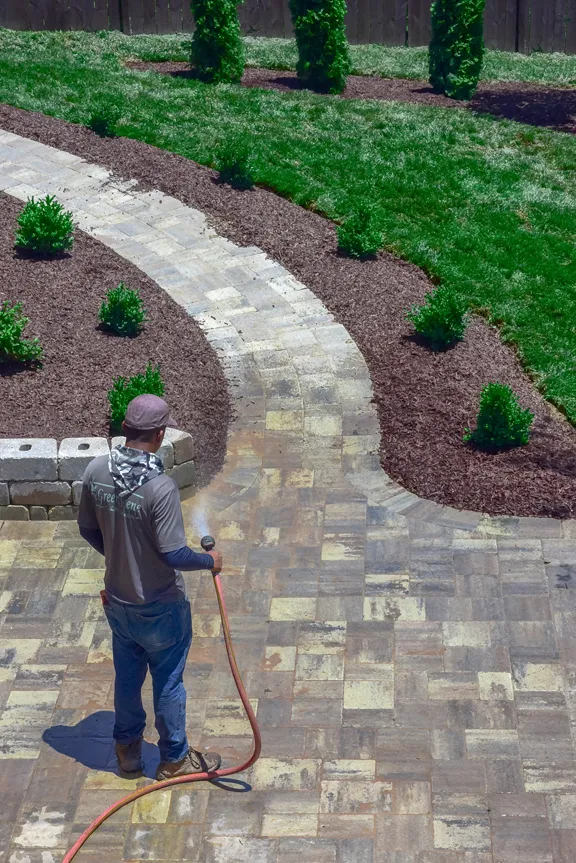
The video is one of the company’s own hardscape projects. Watch for how much of it happens before the finished surface appears.
Who draws the plan, and what happens at the estimate?
Jose Garcia comes out, walks the yard and listens to what you want; he still quotes and designs every project himself. Hand him a blueprint and you’ll get back an itemized plan with each part priced. Have nothing on paper? Green Scene’s design team draws one for the space and the budget you give them.
Bring a number to that meeting. Jose and Teresa Garcia like to say a budget is a real number, and the design gets worked to fit it. Sometimes that means building the patio now and drawing the kitchen or fireplace in as a second phase, with a long-term plan so the later pieces match. Permits and your HOA’s guidelines are Green Scene’s to handle before anyone digs.