

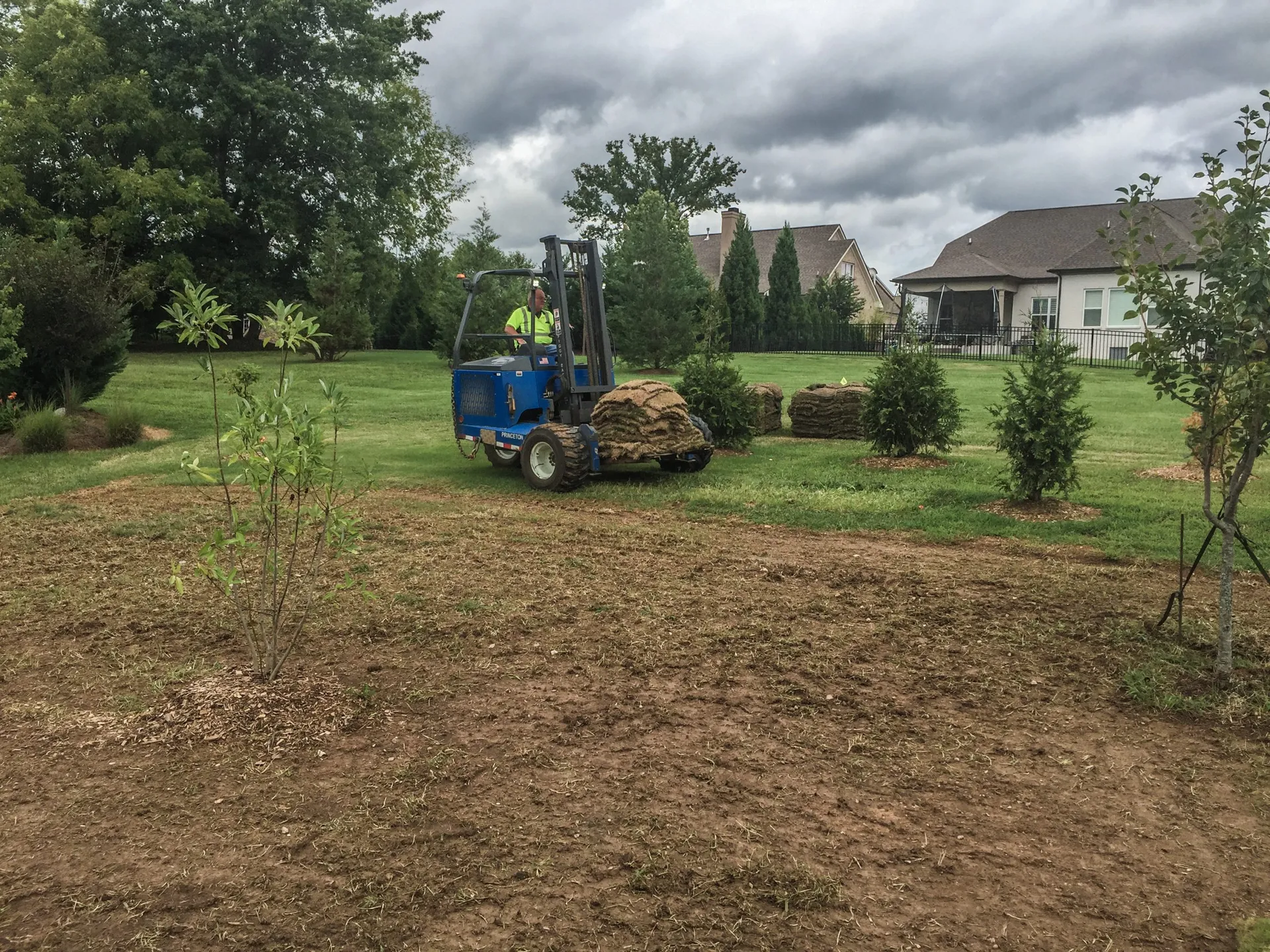
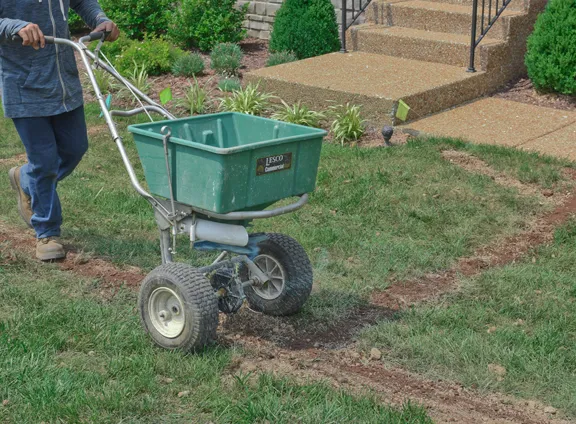
Overseeding spreads new grass seed into the lawn you already have, to thicken it and fill the thin and bare patches. Green Scene core aerates the entire lawn first, so the seed settles into the holes instead of sitting on hard ground, and then seasonal rain and your irrigation system bring it up.
For tall fescue it isn't optional. Fescue has to be overseeded to stay full, and fall is the season for it. Lawns of 419 bermuda can be seeded too, during their summer growth. Most yards need it once or twice a year, depending on how the lawn is holding up.
Why does a thin lawn need overseeding?
Because bare ground never stays empty. Thin spots let weeds and grassy diseases in, and once grassy weeds and lawn-damaging insects take hold, they spread from there. Chemical treatments can slow them down. A thick stand of turf does a better job of keeping them out in the first place.
The thin spots come from a few places. A long freeze can do it, and so can a summer drought. So can a new sprinkler system: unless you choose to re-sod the trench lines after an irrigation installation, those seams have to fill back in from seed.
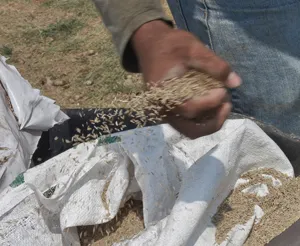
Why aerate the lawn before overseeding?
Seed only grows where it touches soil. Spread over a packed, thatchy lawn, much of it sits on top and never roots. Aerating the whole yard first pulls cores out of the ground and leaves thousands of small pockets for the seed to drop into, protected and in contact with the soil. That's why Green Scene sells the two together and why the fall visit usually includes both. The core aeration page goes into the machine and the fertilizer side.
When is the best time to overseed in Middle Tennessee?
For tall fescue, fall. UT Extension calls fall the recommended time to establish or overseed a fescue lawn, with February and March as the second-best window, and its 2024 lawn calendar puts aerating and overseeding fescue in August. Kentucky bluegrass and most rye varieties follow the same pattern. Bermuda is the exception: it seeds best during its active summer growing season.
| Grass | Best time | Second choice |
|---|---|---|
| Tall fescue | Fall, starting in August | February and March |
| Kentucky bluegrass, most ryes | Fall | Early spring |
| Bermuda | Active growing season | None; it seeds only while growing |
How does new seed get watered and kept?
Seasonal rain does part of it, and the sprinkler system covers the rest, which is one more reason fall works so well. Once the new grass is up, the way it's cut decides whether it stays. Fescue kept at 3 inches holds its moisture and thickness; scalped, it thins out again before the next season. The mowing crews hold that height.
What does the free lawn evaluation cover?
Someone from Green Scene walks the lawn, confirms the grass type, maps where it has thinned, and tells you whether aeration and seed will be enough. Sometimes they won't be. A lawn overrun with weeds, uneven and mostly bare, is a better candidate for a Harley rake and new sod than for another round of seed, and you'll hear that at the evaluation rather than after paying for seed that can't win.