

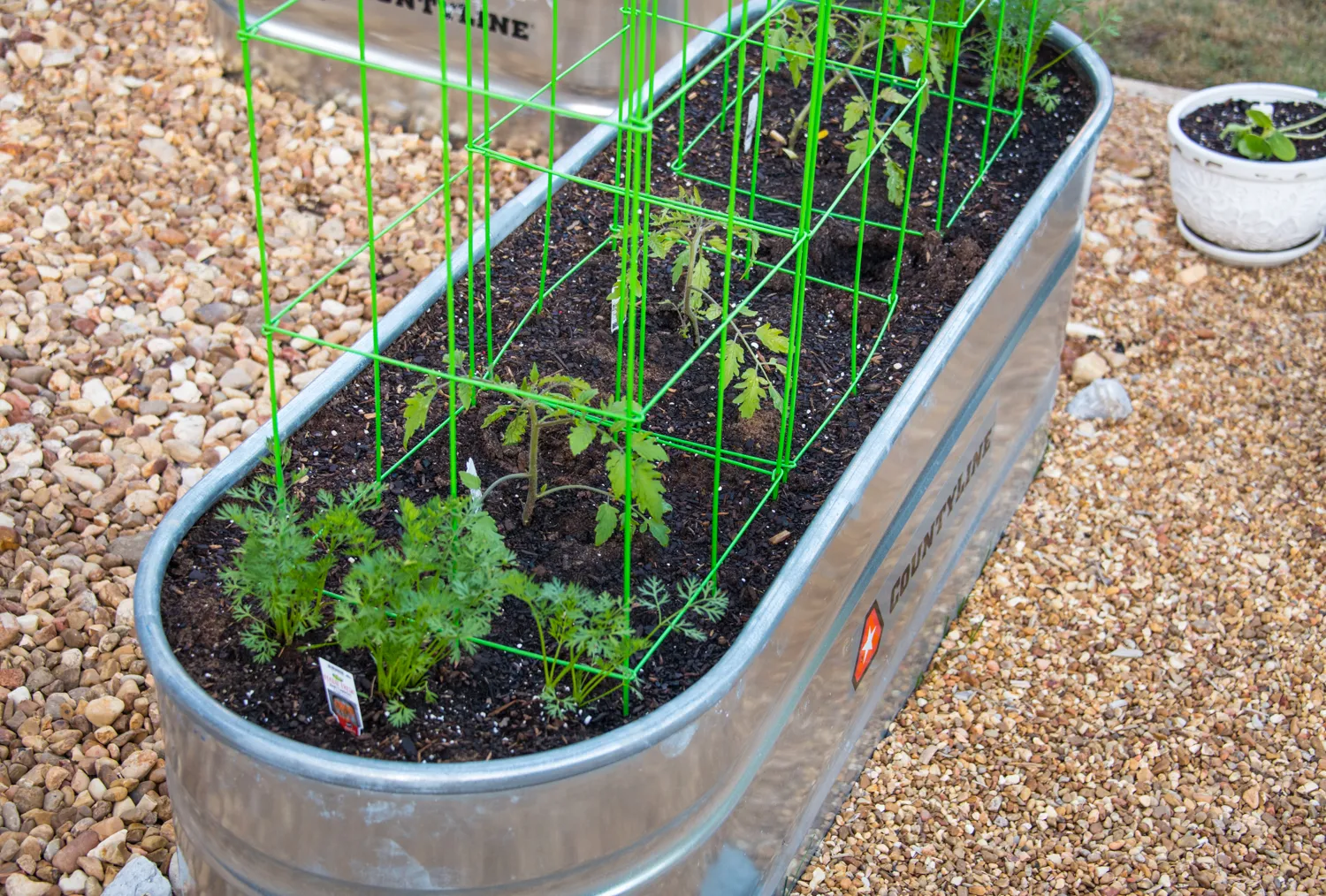
A garden container, the way Green Scene builds it, is a galvanized stock tank turned into a raised bed: set level on a pad that weeds can’t push through, filled with topsoil rich in organic matter, and watered automatically from the sprinkler system you already have. The crews install them around Franklin, Brentwood and Spring Hill, and anywhere else in Williamson County, for people who want herbs or vegetables without tilling a plot.
Because each bed is self-contained, it fits a corner of the yard or a strip beside the house without looking out of place. Once they’re in, there’s little left to do but plant.
How are stock-tank garden beds installed?
The pad takes 3 steps before a tank arrives, and the tanks take 2 more.
- The crew levels the ground where the beds will sit.
- A landscape barrier goes over it, so weeds can’t come up from below.
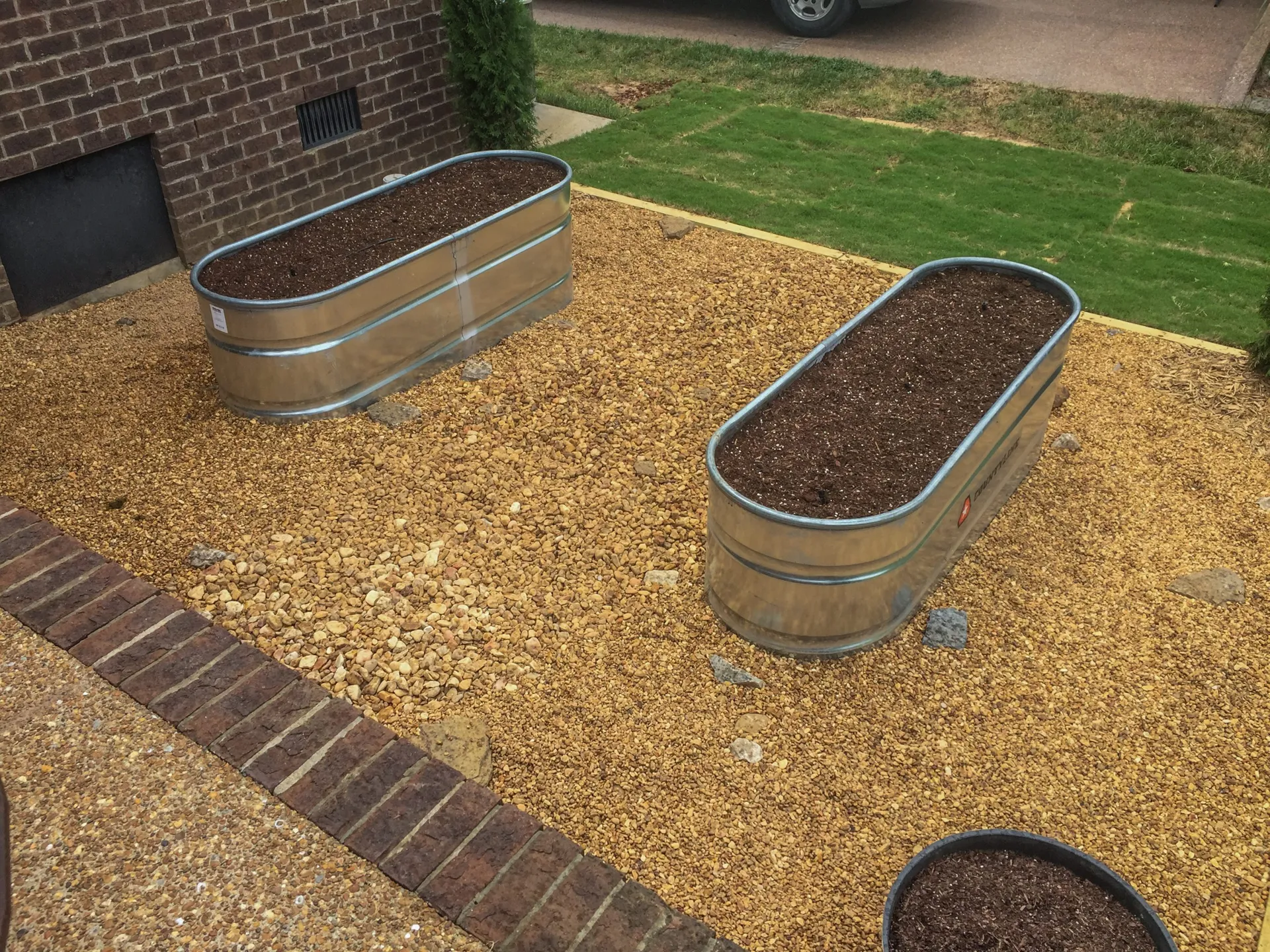
- The barrier is topped with egg rock, pea gravel or pavers, chosen to match the colors already in your landscaping.
- The tanks are set and filled with topsoil rich in organic material and nutrients.
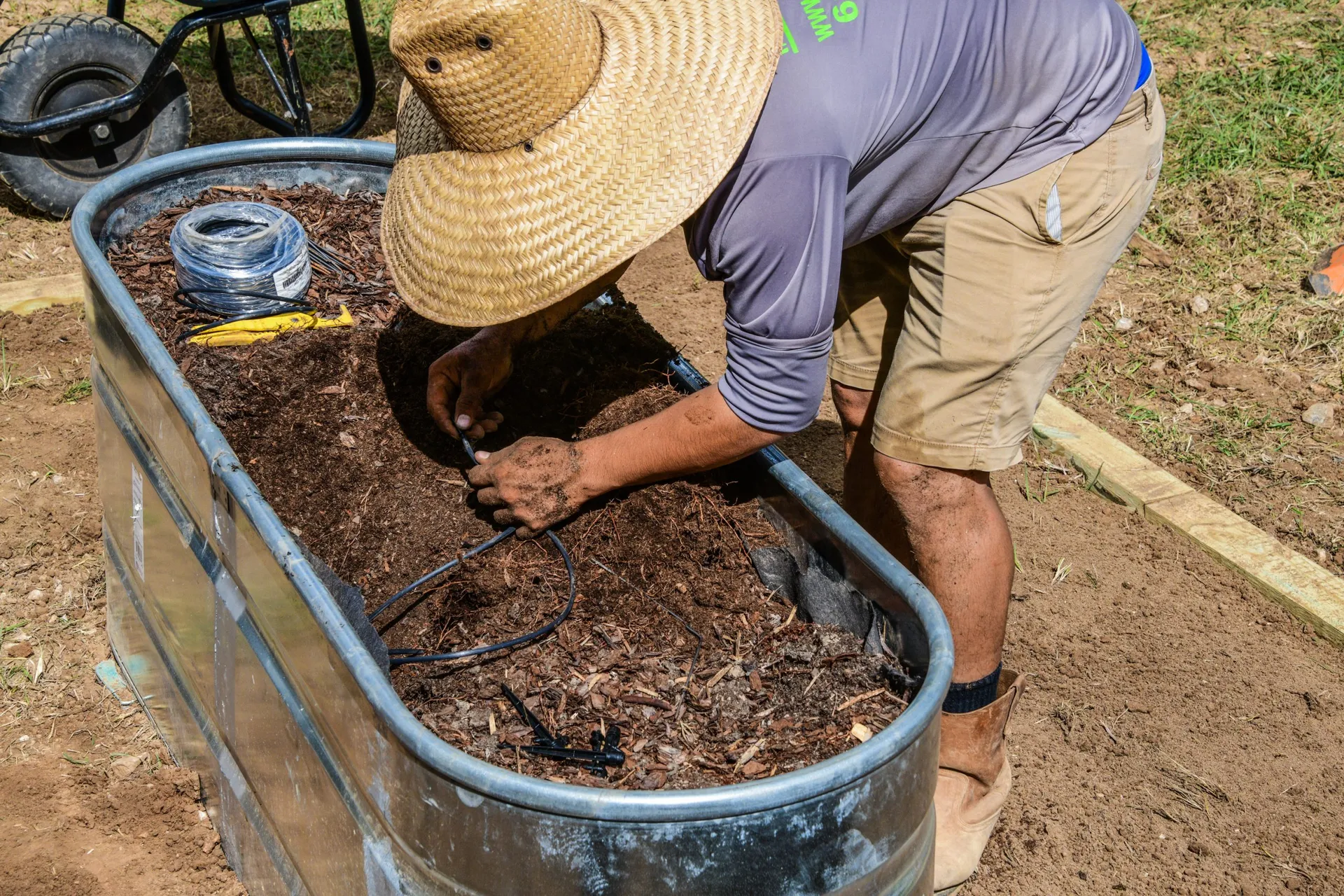
- Drip line is run into each tank and tied into your existing irrigation.
The 2020 job in these photos set the tanks on a pad of tan gravel beside a brick border, with new sod going down around it and a row of privacy trees planted along the same property.
How does the automatic watering work?
Each bed gets its own drip line, connected to the irrigation system that already waters your lawn and beds. It runs on the controller’s schedule, so the tomatoes don’t depend on somebody remembering the hose during a July heat wave. If the beds sit a long way from the nearest zone, or you’d like them on a different schedule from the grass, that’s a matter of adding a zone, which Green Scene’s irrigation repair and maintenance crews do on existing systems.
A raised tank also means the soil is under control. No Williamson County clay packed down by construction equipment, no builder fill: only the topsoil Green Scene put in. On a lot where the native ground is that hard, that’s most of the point.
Why grow in a stock tank instead of the ground?
- No tilling, ever. The soil stays loose because nobody walks on it.
- Weeds stay out, blocked by the barrier and gravel under the tanks.
- Herbs and vegetables grow all season in soil you didn’t have to fight.
- Changes are easy: add a tank next spring, move one, or switch what grows in it.
- They suit almost any landscape, with the stone around them matched to what’s already there.
Upkeep is mostly picking. With the watering automatic and the weeds kept underneath, there’s little to maintain beyond what you plant and harvest.
What can you grow in them?
Herbs and vegetables are what these beds are for. The ones on this page were planted with caged tomatoes and a row of carrots, but the choice is yours, and swapping crops between seasons means clearing a bed and replanting it. If you’d rather have color than produce, Green Scene’s seasonal flower crews plant and rotate annuals as well.