

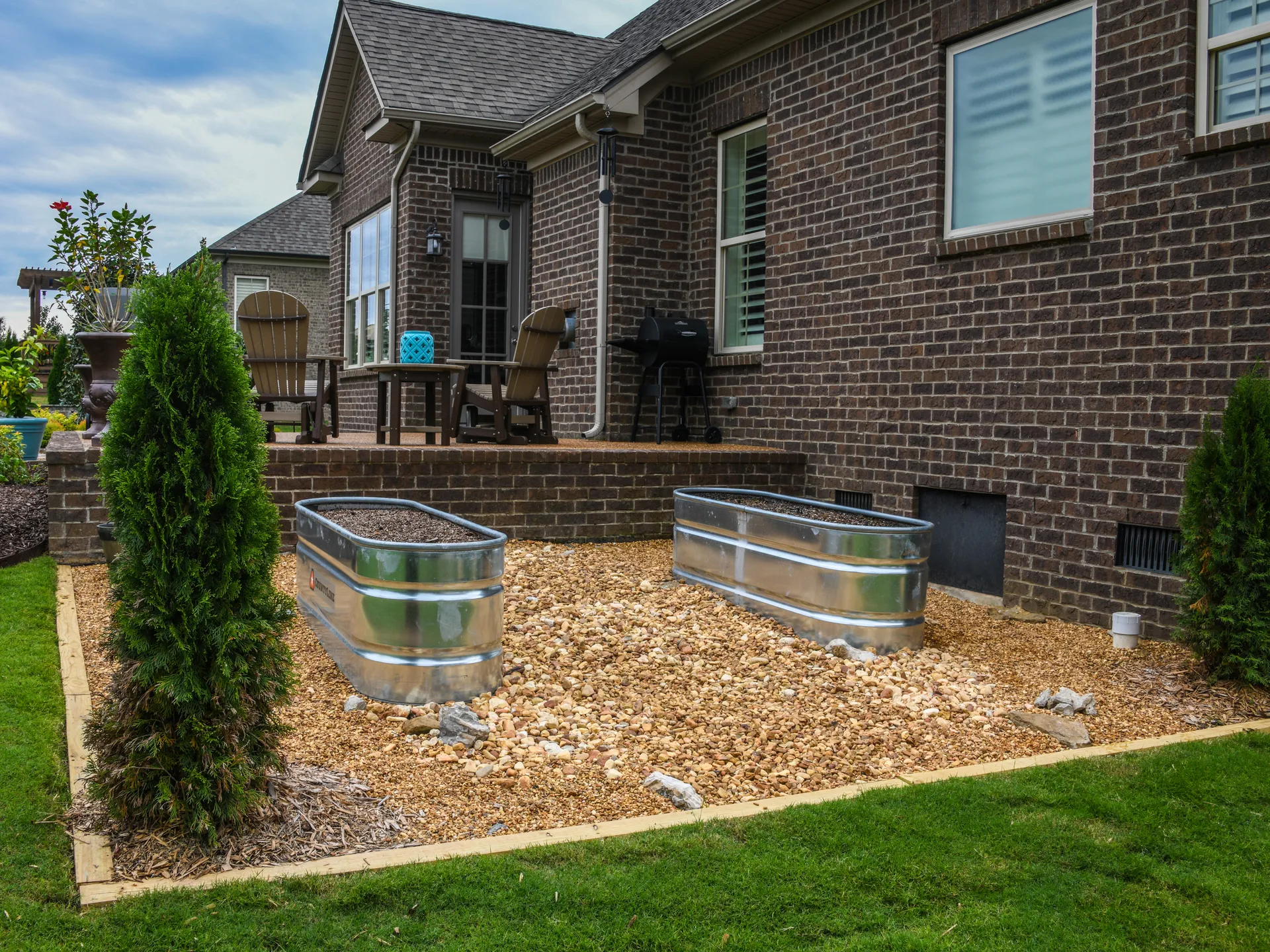
Landscape design is the plan that comes before the planting: where the beds go, which shrubs and trees fill them, where light falls after dark, and how all of it sits against the patio, the walks and the sprinkler zones. Green Scene's design team works it out with the homeowner, on the property, for yards across Franklin and Williamson County and up into Green Hills and Belle Meade.
You don't need a drawing to start. Hand over a blueprint and it comes back as an itemized price. Show up with only an idea and the team draws a plan sized to the budget you name. Jose Garcia, who built the company from a single push mower, still quotes and designs on every project.
What goes into a landscape design?
Everything that grows, plus the pieces that have to work around it. A typical plan settles:
- Plants for the look you're after. Shrubs, trees and a blend of annuals and perennials, chosen with you rather than off a stock list.
- Screening. A row of Emerald Green arborvitae or Thuja Green Giant where you want privacy and would rather not build a fence. The privacy tree page covers species and sizes.
- Lighting. Suggestions for the walks, the trees and the front of the house, drawn in now so the wire runs before the mulch goes down.
- Built features. A patio, a paver walk or a fire pit placed where it makes sense with the plantings.
- Water. Bed zones on the sprinkler system, or drip lines to raised beds.
Why check drainage before picking a single plant?
Because water decides what survives. Before anything is placed on paper, the team looks at where rain runs across the lot, what's already built on it and what's already growing. Much of the ground in this county is clay, and on newer lots it has usually been packed hard by the builder's equipment. A bed set in the low corner of a yard like that sits wet for days after a storm.
Existing trees get the same attention. Some towns regulate them: in Belle Meade, cutting down a tree more than 4 inches across takes a city permit under Ordinance 2019-11. If a plan only works with a tree gone, that question gets answered before you pay for anything else.
Can one plan cover the patio and the sprinklers too?
Yes, and it saves digging twice. Green Scene builds the hardscape and installs the irrigation as well as the plantings, so the patio, the pipe and the beds can be drawn on one sheet. Planned together, the sprinkler lines don't have to be trenched through a bed you just paid to fill.
When a project leans more toward stone than plants, the hardscape design page explains how the base and grade are handled.
How does the design process work?
It runs in five steps, and the second one matters most:
- Start from your plan, or let the team draw one.
- Set a budget. Teresa and Jose Garcia have always treated it as a real number, and the plan is drawn to fit it.
- Pick a theme, and decide whether it includes lighting, gas or water features.
- Choose the materials: stone, mulch, plant varieties, fixtures.
- Think past this year. A long-term plan lets a second phase match the first.
The estimate is free and in writing, with no obligation to go ahead.
What does a redesign of an older yard look like?
Often it starts with taking things out. In Franklin, Megan B. had a dead crape myrtle and a tangle of overgrown hollies replaced with new plantings. Doug P. in Brentwood had old shrubs, trees and bushes swapped for new ones, with the trees he kept pruned back into shape. Photos of finished yards are in the project gallery.
They removed a dead crape myrtle tree and a bunch of unruly holly bushes. They replaced them with healthy and beautiful new plants.
Megan B., Franklin