

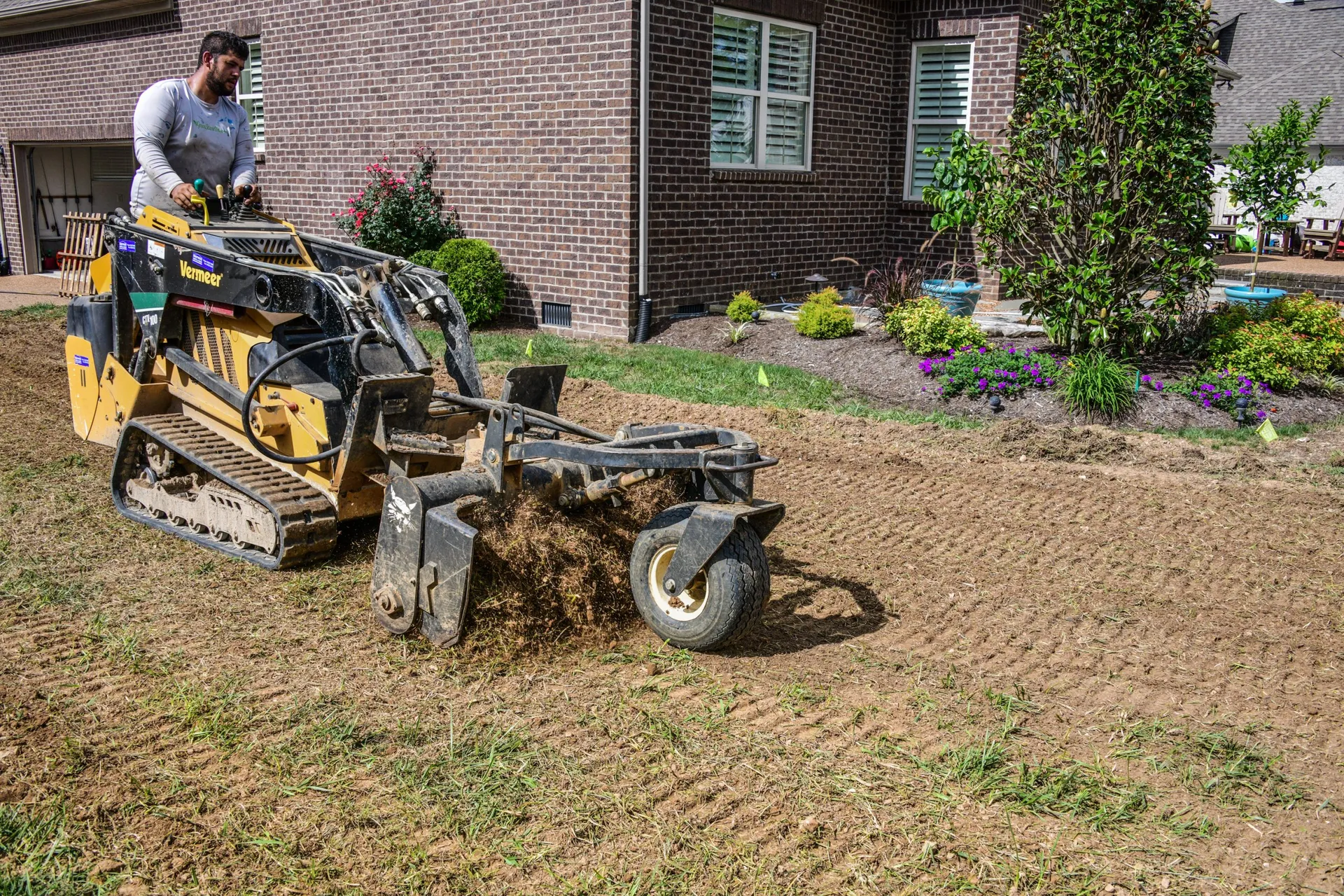
A Harley rake is a skid steer attachment fitted with rotating carbide steel blades. Run across a yard, it rips out the old lawn and the weeds, grinds up rocks, and turns the ground into a loose, level bed for seed or sod. Green Scene uses it on lawns in Franklin, Brentwood, Spring Hill and other Williamson County towns when patching won't fix what's wrong.
It's the prep step under every sod installation the company does, and it works just as well ahead of seed.
What does a Harley rake do to a yard?
Several jobs in one pass. As the blades turn, they:
- tear up the old turf and the weeds growing in it, without spraying anything
- break up rocks and drag the rest to the surface, where they can be hauled off
- chop the old grass and roots into the soil, where that organic matter feeds the next lawn
- smooth out ruts and high spots into one level surface
What's left looks like a freshly worked field, and that's the point. New grass needs loose soil to root into.
When isn’t core aeration enough?
When there's not much lawn left to save. Core aeration pulls plugs from turf that's thin but still alive, and seed dropped into the holes thickens it back up. That's the right call for most established yards.
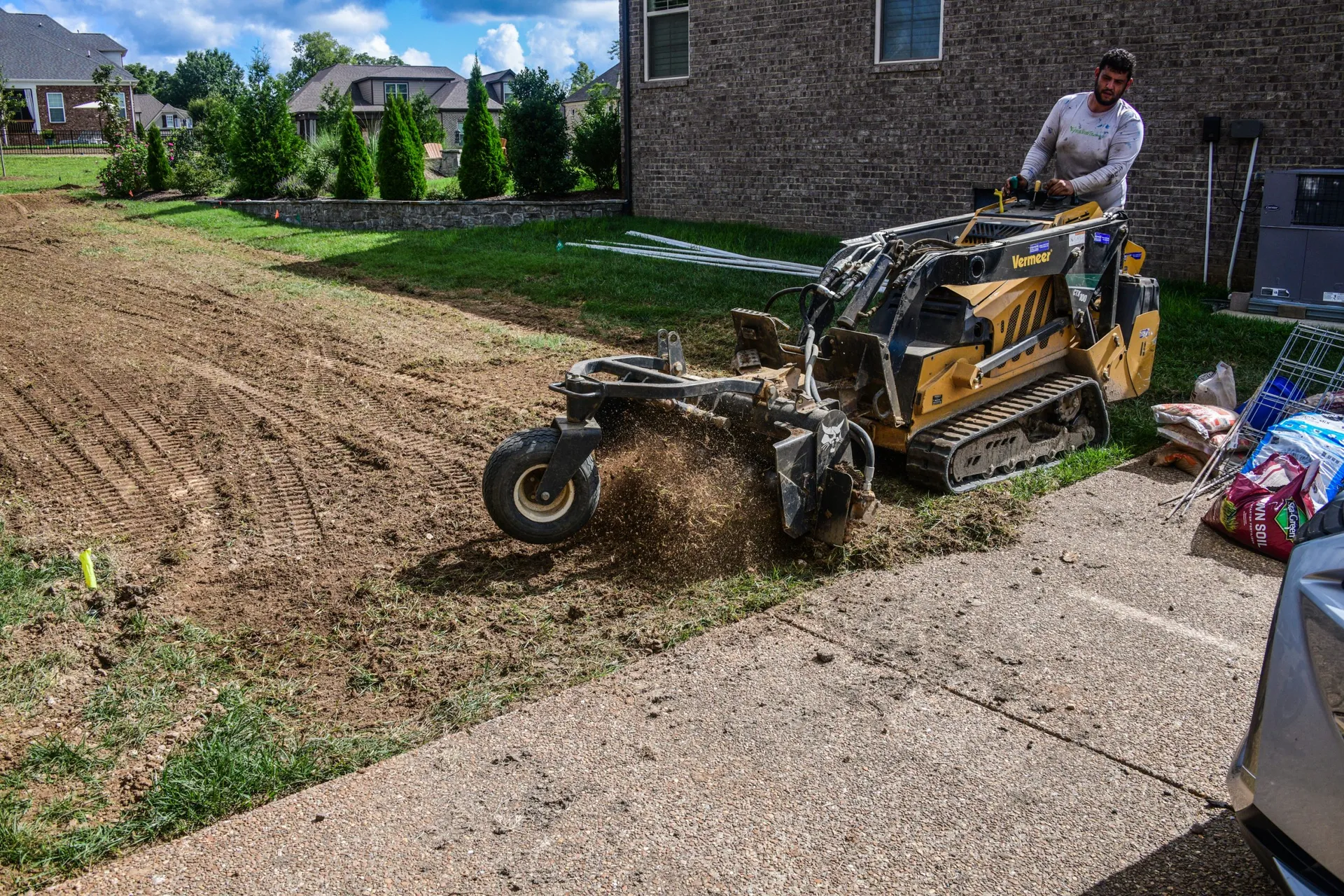
It can't level a yard, though, and it does nothing about a lawn that's more weeds than grass or soil full of stones. Around new homes in particular, the ground is often littered with rocks and leftover building debris just under the surface. Punching holes in that and spreading seed on top only hides the problem for a season. The rake clears it out.
Why level the soil before seed or sod?
Because whatever shape the ground is in, the new lawn takes on. Sod laid over a dip stays a dip. Stones left an inch down are still there under the new roots. Every bump also becomes a spot where the mower scalps the grass, and on a yard mowed at fescue's 3 inches or zoysia's 1 to 2, that shows.
If you're paying for new sod, the ground under it deserves the same care. The prep is what decides how that investment looks two summers from now.
Seed or sod after the rake?
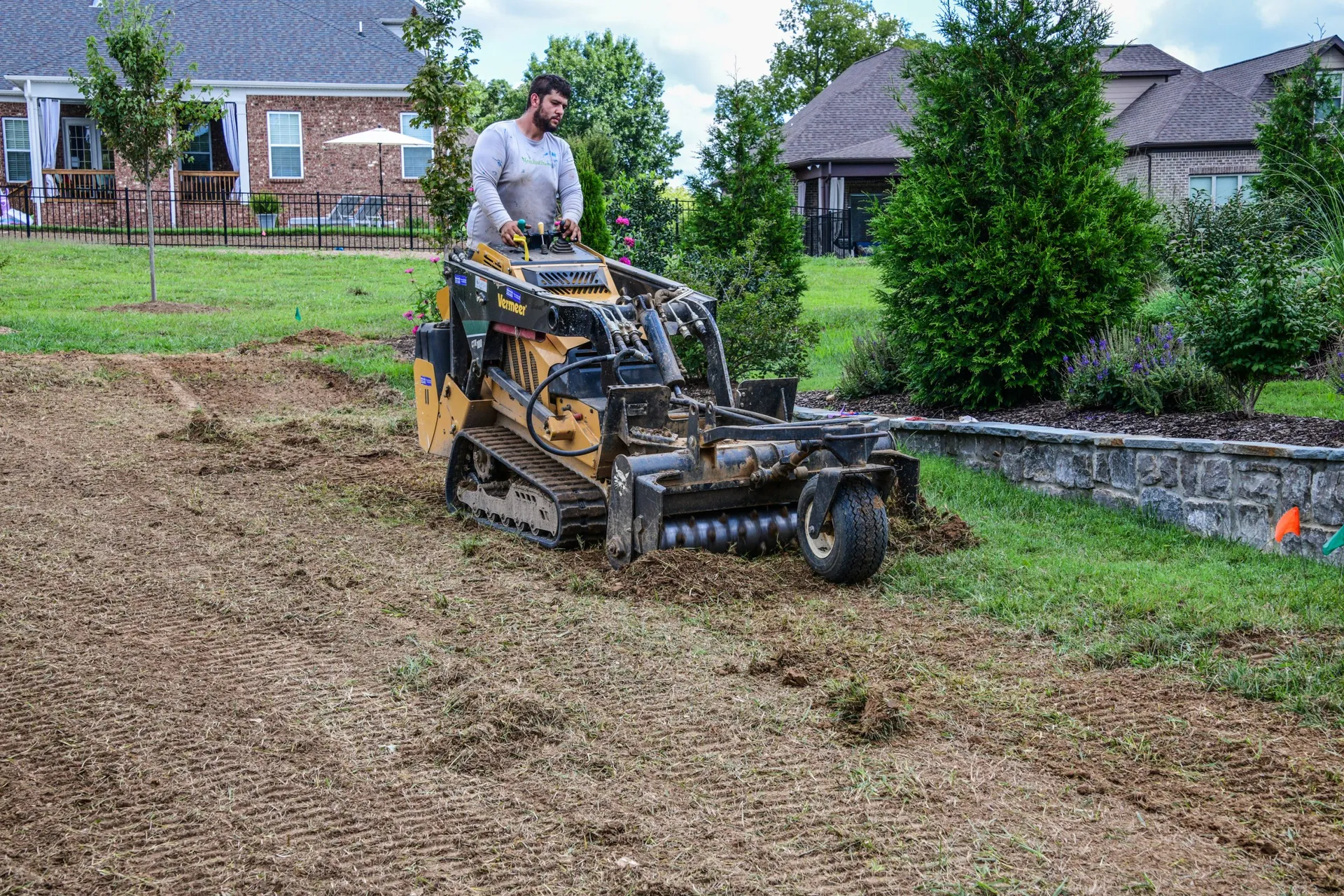
Either one works on a raked bed, and the choice usually comes down to timing and patience.
- Sod gives you a finished lawn the day it's laid: fescue, 419 Tifway bermuda or zoysia.
- Seed takes longer to fill in, and it has a season. UT Extension names fall as the best time to start a tall fescue lawn, with February and March as the runner-up. Fescue seeding runs on that calendar.
Jose Garcia, who still quotes and plans every job himself, will tell you on the estimate visit which makes more sense for your yard and the time of year.