

(615) 585-0280 Monday–Sunday, 7 AM–6 PM 431 Mealer Street, Franklin
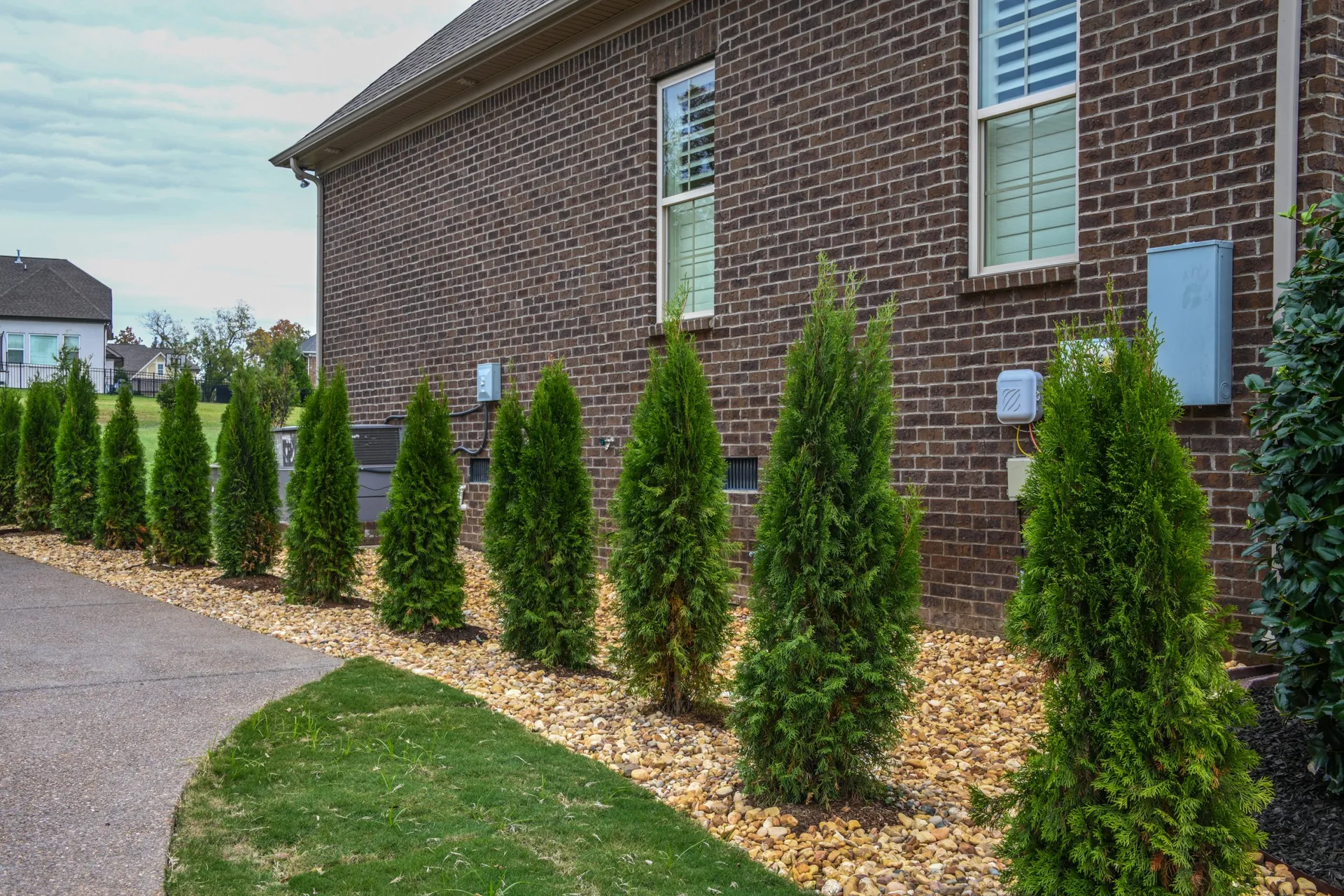
A row of young arborvitae planted in a river-rock bed along the side of a brick house, beside a curving driveway

Privacy trees

A privacy screen that grows instead of needing paint

A row of evergreens blocks the view like a fence does, without boxing the yard in. For most Williamson County property lines, the trees are Emerald Green arborvitae or Thuja Green Giant.

Free written estimate

Tell us what the yard needs. The office calls back to set up a visit.

What happens to your message: privacy policy.

Privacy tree fencing is a line of evergreen trees planted close enough together to form a living screen along a property line, a patio or the side of a house. Green Scene's go-to trees for it are Emerald Green arborvitae and Thuja Green Giant, though other species are available. One of the company's trained crew helps you pick the variety and the planting size, the trees go in, and from then on they need little to no maintenance.

Emerald Green arborvitae or Thuja Green Giant?

It comes down to how tall a screen you want and how much room the border gives it. Both are evergreens that hold their color all year, but they're different trees, and which one fits is a conversation to have on the estimate visit with the space in front of you. The tree that suits a strip beside a driveway isn't always the one for a long back property line.

Planting size is the other half of the choice. Larger trees give you more screen on day one; smaller ones leave more room in the budget. Matching the two to the money you want to spend is where the budget flexibility of a tree screen comes from.

Why plant trees instead of building a fence?

Because a fence only does one job. A row of arborvitae gives you privacy and does several other things along the way:

  • stays green through every season, with nothing to stain or paint
  • breaks the wind across an open lot
  • softens noise from a street or the neighbors
  • improves the air around the house
  • lets you control how high and how wide the border grows

It also doesn't feel like being fenced in. Plenty of people want privacy without a wall around the backyard, and a screen of trees reads as part of the landscape. On a bigger plan, the trees can be drawn into a full landscape design with the beds and lighting around them.

How does a privacy tree project go?

In four steps:

  1. Start with your plan for the border, or have Green Scene draw one.
  2. Set a budget. Jose and Teresa Garcia have always treated that number as real.
  3. Choose the species and the size of the trees.
  4. The crew plants the row.

Jose Garcia still quotes and designs every job himself, so the person who measures the property line is the person who prices it. The estimate is free, written and comes with no obligation.
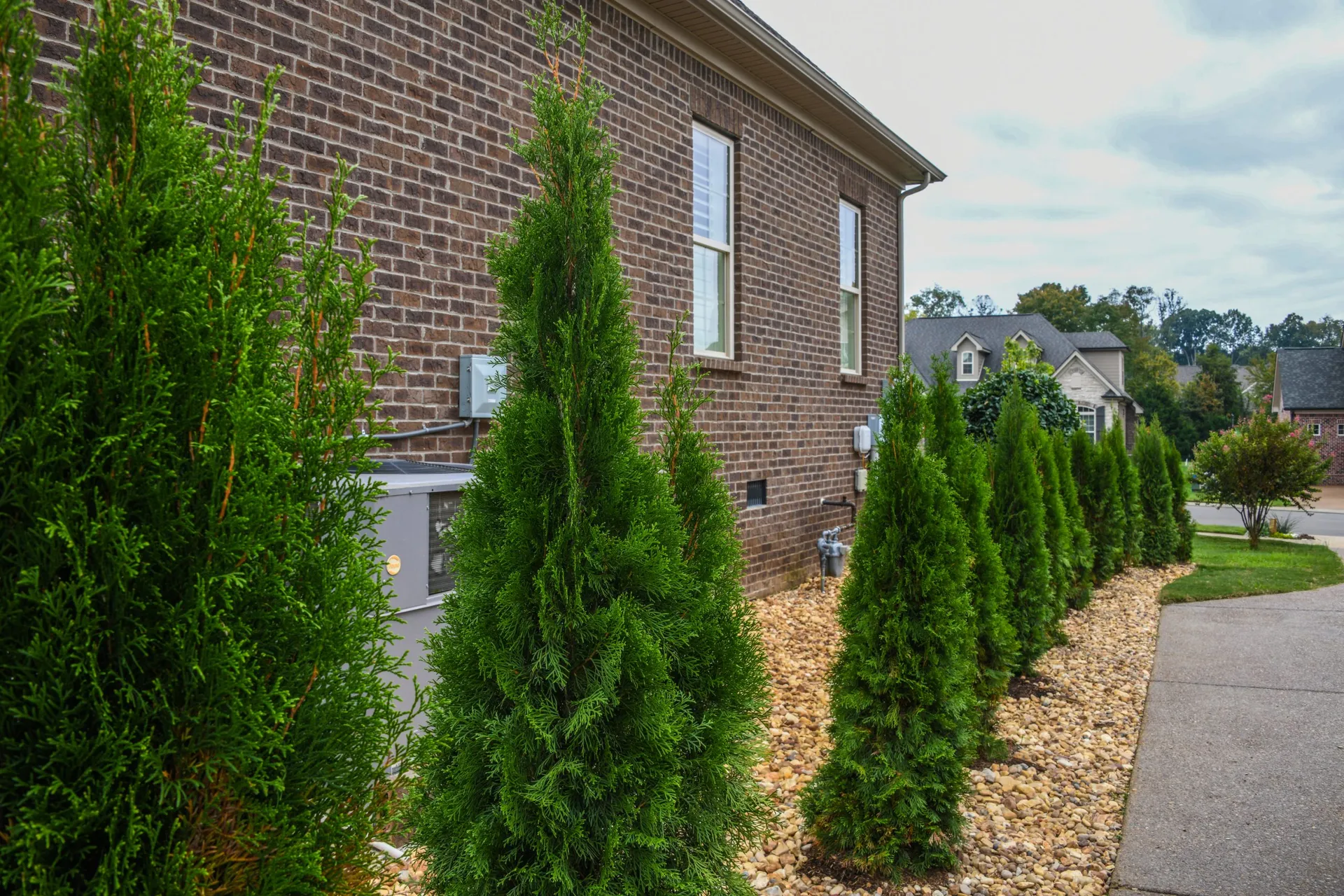
Young arborvitae trees in a stone-mulched bed running the length of a brick house, next to a sidewalk
A new row of arborvitae along the side of a brick home, set in a stone bed.

What if there are old trees in the way?

Sometimes the spot for a new screen is taken by tired shrubs or a tree that's past saving, and those come out first. Check your town's rules before that happens. In Belle Meade, taking down a tree wider than 4 inches needs a city permit (Ordinance 2019-11), and Forest Hills asks for one on most removals.

After planting, water is the thing to think about. A sprinkler system can give shrubs and trees measured moisture on their own zone, and Green Scene can add that zone through its irrigation repair service.

Answers

Privacy Tree Fencing questions

Which is better for a privacy screen, Emerald Green arborvitae or Thuja Green Giant?

Neither wins everywhere; it depends on how tall you want the screen and how much room the border has. Both are on Green Scene's list for evergreen privacy rows. A trained member of the crew looks at the border with you on a free estimate visit and recommends the variety and the size to plant.

How far apart should arborvitae be planted for privacy?

The spacing follows the variety and the size of the trees you plant, since an Emerald Green arborvitae and a Thuja Green Giant are different trees. Green Scene settles species and planting size first, then sets the row so the trees close into one continuous screen along your property line.

Do arborvitae stay green in the winter?

Yes. Emerald Green arborvitae and Thuja Green Giant are both evergreens, so a privacy row keeps its color, and keeps hiding the view, through every season of the year, with no bare months after the leaves fall elsewhere in the yard. Green Scene plants both as living fences, from Franklin and Brentwood down to Spring Hill.

Are privacy trees cheaper than a privacy fence?

It depends on the length of the row, the species and the size you plant, which is where the flexibility lies: smaller trees fit a tighter budget. Unlike a fence, trees never need painting. Green Scene prices your border in a free written estimate, so you can compare it with a fence quote.

How much care does a row of arborvitae need?

Very little. A privacy row of Emerald Green arborvitae or Thuja Green Giant needs little to no maintenance and nothing like the staining or painting a wood fence does. If you'd rather not drag a hose down the row, a sprinkler zone can give the trees measured water.

Do privacy trees block noise and wind?

They help with both. A dense evergreen row works as a wind break across an open lot and buffers noise from a street or the house next door, and it improves the air around the yard too. Green Scene plants these screens along property lines in Franklin and across Williamson County.

Free written estimates

Tell us about the yard

A sprinkler system, a patio, a lawn that never took. Call the office or send the form and we will set up a visit.

Call Request an estimate