

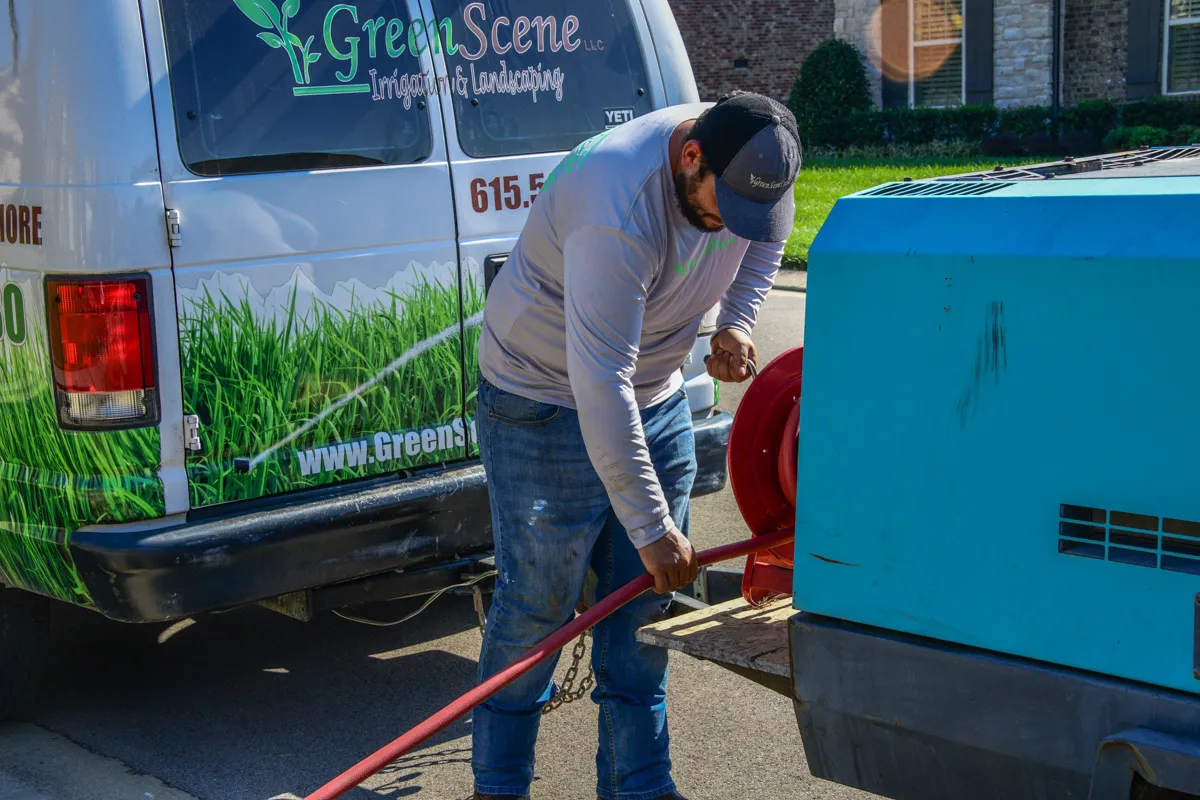
Winterizing a sprinkler system means purging the water from every line before it can freeze. We do it with regulated air pressure, one zone at a time, and keep an eye on the gauge the whole way so the heads and pipe come through intact. While we're there, the backflow device, the irrigation water meter and the shut-off valve get checked as well.
Schedule it once the forecast starts expecting temperatures below 32°. We winterize any system in Franklin, Brentwood and our other towns, whether Green Scene installed it or not.
Why winterize a sprinkler system in Middle Tennessee?
Frozen pipes are the number one cause of irrigation leaks. Water expands as it freezes, and the pipe and its joints are what give. Our winters can run mild for weeks and then turn overnight, so a system that sits full of water is gambling on the forecast.
Shutting off the timer and closing the water doesn't solve it. However long ago the system last ran, some water stays in the lines, and that leftover is what freezes. The only way to get it out is to push it out.
How do you blow out the lines without damaging them?
With pressure that's regulated and watched. Air from the compressor goes through each zone in turn until the lines run dry, and the technician monitors the pressure the entire time. That second part is the difference. Too much air can blow apart the very heads and pipe the job is supposed to protect.
That's why we steer homeowners away from doing it with a shop compressor. Unless you're a professional, a do-it-yourself blowout can turn into expensive repairs that don't show up until the water goes back on in spring.
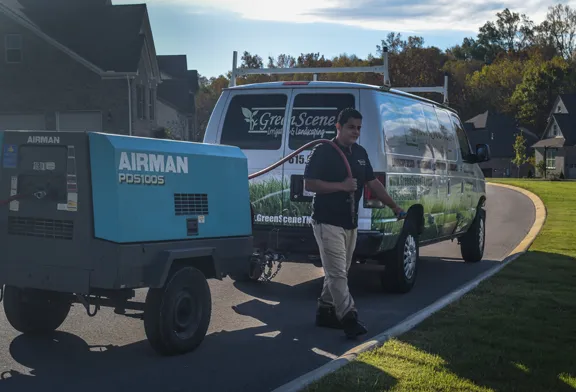
What else gets checked while you’re there?
Three things beyond the lines themselves:
- the backflow device, checked for leaks, as it is at every service visit we make
- the irrigation water meter
- the turn-off valve for the irrigation line
If one of them needs work, you hear about it in the fall rather than discovering it at the spring start-up, and it can go on the list for a repair visit before the season turns.
Will you winterize a system someone else installed?
Yes. Who put the system in makes no difference to the method: regulated pressure through every zone, and the same look at the backflow device, the meter and the shut-off. If yours came with the house and you've never known who installed it, a fall winterization is a sensible first visit. From then on we keep a history of the system on file, so next spring's technician knows what this fall's visit turned up.
What comes after the winterization?
The spring start-up. The fall visit empties the system and the spring one brings it back, resets the controller and runs every zone. Customers who want both handled without a phone call each season sign up for an annual maintenance agreement, where the winterization is scheduled for late fall automatically.