

(615) 585-0280 Monday–Sunday, 7 AM–6 PM 431 Mealer Street, Franklin
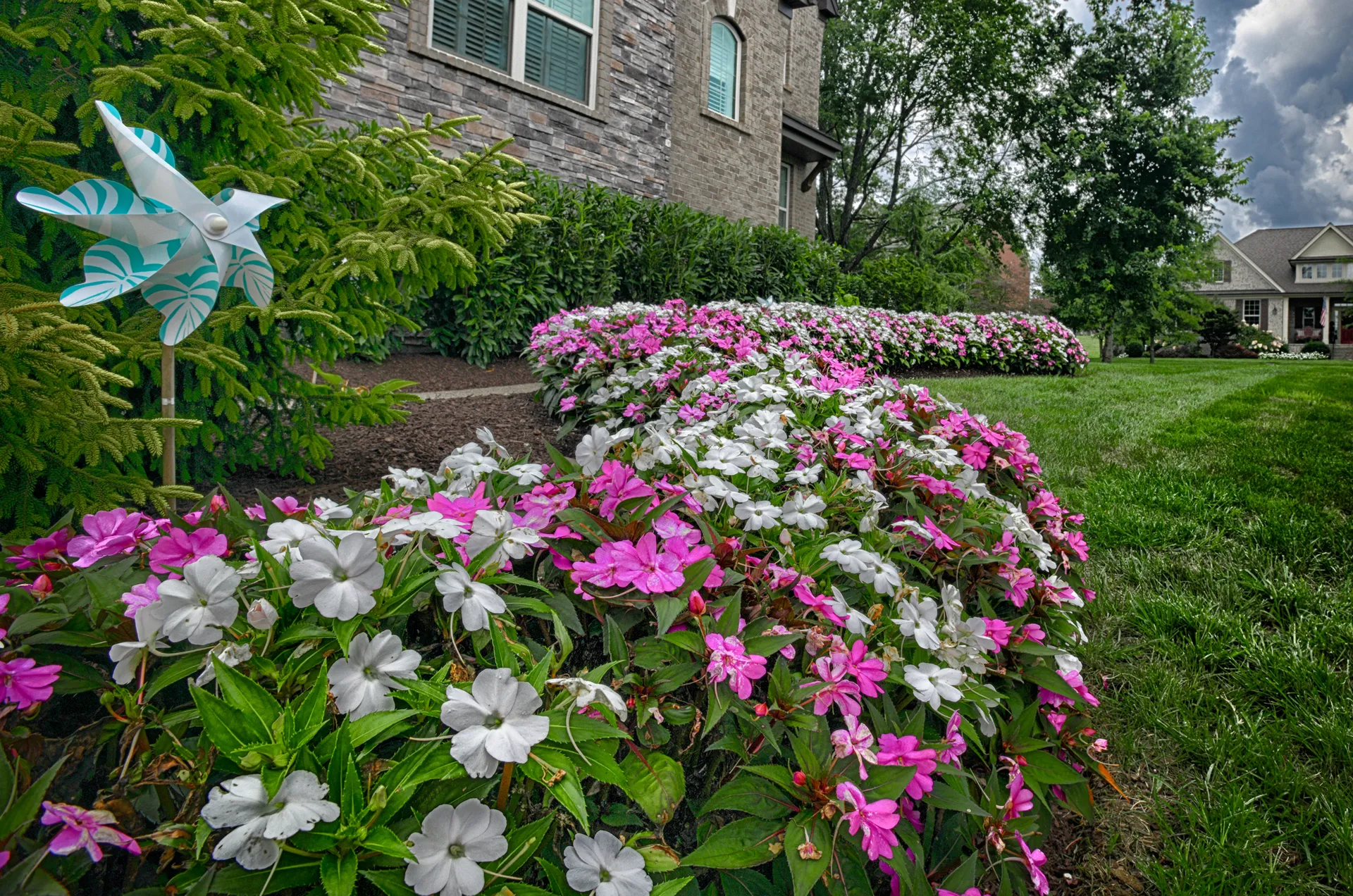
A long front bed of pink and white vinca curving along the lawn of a stone and brick house

Seasonal flowers

Seasonal flowers, planted in beds built to feed them

You choose the colors and the varieties. Green Scene digs out the clay, plants the bed, and keeps it weeded, fed and changed over as one season gives way to the next.

Free written estimate

Tell us what the yard needs. The office calls back to set up a visit.

What happens to your message: privacy policy.

Seasonal flower installation means color planted for the time of year and swapped out when that time passes. Green Scene prepares the beds, plants a mix of annuals and perennials you've picked, and, on its seasonal program, comes back to weed, mulch, feed and rotate them. It's for homeowners in Franklin, Brentwood and Nashville who want full beds without spending their weekends on their knees, and for businesses that want an entrance that looks looked-after.

Annuals or perennials: which go in a seasonal bed?

Usually both. Annuals bloom hard for one season and are pulled when it ends, which is what makes rotation possible: a bed can change color from spring to summer to fall. Perennials stay in the ground and come back year after year, giving the bed a backbone that doesn't have to be replanted. Most of the beds Green Scene plants blend the 2.

The choice runs to hundreds of varieties. Some customers come in wanting a rose garden. Others ask for dahlias, lilies or tulips, or simply name the colors they like and leave the plant list to the crew.
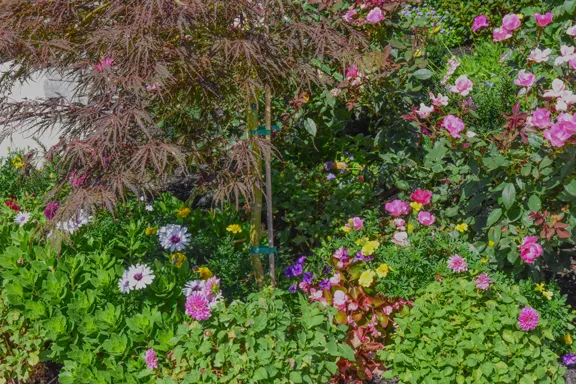
Pink, purple and white annuals growing thickly beneath a red-leaf Japanese maple beside a walk
Mixed annuals tucked under an ornamental maple along a front walk.

Why does the bed matter more than the flowers?

Because a lot of Williamson County soil is clay, and healthy flowers start with a bed rich in nutrients. Before anything is planted, the crew pulls out the weeds, the clay and whatever debris has collected, then fills the bed with organic, earth-friendly material.

Any serious gardener will tell you the same thing. Choosing the plants is the fun part; the ground they go into decides how they do.
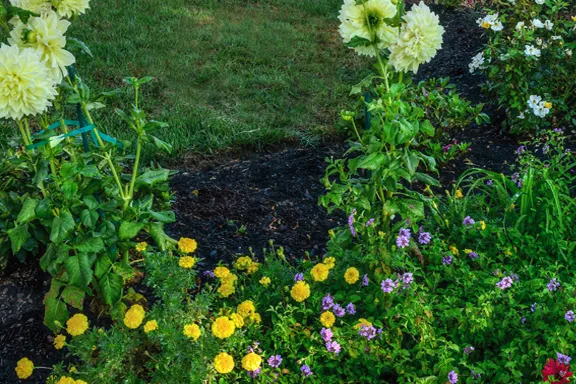
Yellow marigolds, white dahlias and purple flowers in a dark mulched bed at the edge of a lawn
Marigolds in front, dahlias behind, in a bed of rich, dark soil.

What does the seasonal flower program cover?

Everything after the first planting, on either a seasonal or a yearly basis:

  • flowers installed, then rotated out as the seasons change
  • weeding and general bed care between visits
  • mulch and compost added when the beds need them
  • a fertilization schedule that's watched and adjusted, not guessed at

Beds can also be folded into landscape maintenance, so the shrubs and the flowers are tended on the same visits.

How do the flowers get watered?

Best of all, by a sprinkler zone of their own. A zoned system can give beds measured water on a different schedule from the lawn, so the flowers aren't stuck on whatever schedule suits the grass. If your system doesn't have a bed zone yet, Green Scene can add a zone to an existing system, whoever put it in.

Who looks after the beds?

A family business based at 431 Mealer Street in Franklin. Jose Garcia, the owner, walks the beds with you and puts the plan together. Teresa Garcia, his wife, grew up in Franklin and runs the office: she sets the rotation dates and answers the scheduling and billing questions. Antonio Estrada is the one to call if something about a visit isn't right. Before a single flat is planted, you'll have a written cost analysis for your beds.

We live here, too! So our promises are more than just words.

Teresa & Jose Garcia

Answers

Seasonal Flowers questions

How much does seasonal flower installation cost in Franklin, TN?

It varies with how big the beds are, how much clay and debris has to come out, which flowers you choose and how often they're rotated. Green Scene prepares a complete cost analysis for your beds at no charge and with no obligation.

Do seasonal flowers come back every year?

Perennials do; annuals don't. Annuals give one season of strong color and are then pulled and replaced, while perennials return each year from the same roots. Green Scene usually plants a blend, so the bed keeps a permanent framework and the annual color changes as the seasons turn.

How do you prepare a flower bed in clay soil?

Dig the clay out rather than planting into it. Green Scene removes the weeds, the clay and any debris from the bed and replaces them with organic, earth-friendly material, which gives new roots something to grow into. Mulch and compost are added later as the bed needs them.

Can Green Scene plant a rose garden or tulips?

Yes. Roses, dahlias, lilies and tulips are all on the list, along with hundreds of other annuals and perennials. You can name the exact plants you want or just the colors, and the crew will help choose a mix that blooms well for the season and the spot.

Do seasonal flower beds need to be fertilized?

They do, on a schedule. Green Scene's seasonal flower program includes a fertilization schedule that the crew monitors through the year, along with weeding and mulching or composting as needed. You can take the program for one season or keep it all year.

Does Green Scene plant seasonal flowers for businesses?

Yes. Seasonal flower installation is offered to businesses as well as homeowners, and the program is the same: beds prepared, flowers installed and rotated, then weeded, mulched and fed. Service can be seasonal or for the full year, with a written cost analysis up front.

Free written estimates

Tell us about the yard

A sprinkler system, a patio, a lawn that never took. Call the office or send the form and we will set up a visit.

Call Request an estimate