

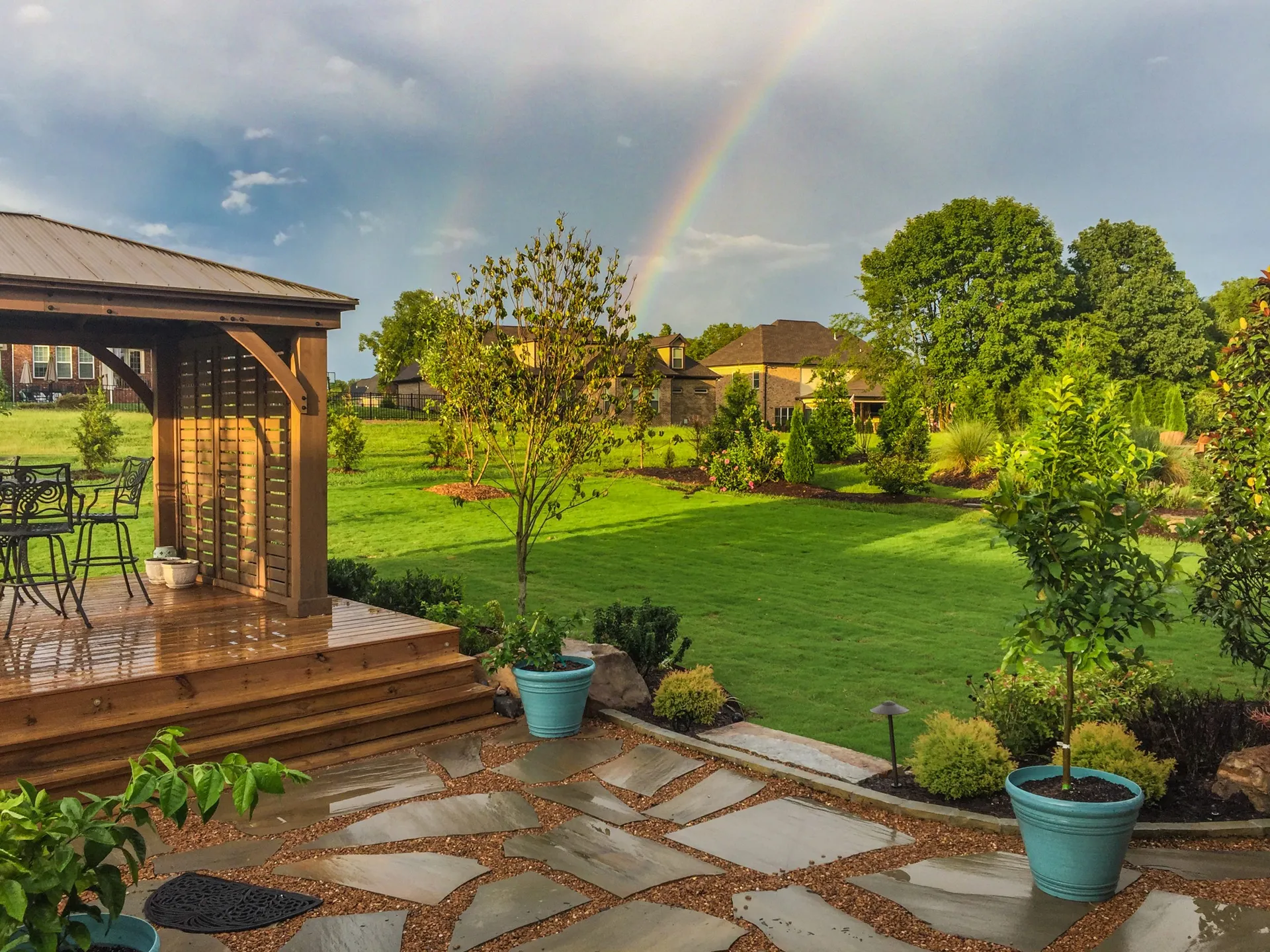
A patio is the paved floor. A pergola is the open frame of posts and beams over it, and a covered patio adds a solid roof so you can stay out through a summer storm. Green Scene builds all three, often together, for homes in Franklin, Brentwood, Spring Hill and other Williamson County communities. The floor is pavers or stone on a compacted base, built the way the company builds any paver patio and hardscape.
A covered addition is the bigger undertaking. It’s a structure tied to the house, so it needs a building permit, and in most subdivisions the HOA has a say in how it looks.
What should you decide before the estimate?
Green Scene’s checklist for a covered patio runs six lines:
- A budget, even a rough one
- The architectural style of your home, so the roofline and posts look like they belong
- Your HOA’s guidelines and restrictions, if there’s an HOA
- Materials: stone, wood and the colors
- The size and scope of the addition
- Which way it faces relative to the sun
That last line is the one people skip. A pergola that shades the table at noon may do nothing at 6 p.m., when you’re actually eating out there, so the site visit checks where the house already throws shade before a post is placed.
Do pergolas and covered patios need a permit?
A covered addition does, and Green Scene pulls the building permit as part of the job. Each town runs its own office. Brentwood’s Codes Section takes applications electronically; Spring Hill’s Building Codes and Inspection Department enforces the 2018 International Residential Code.
The HOA is the other approval. Green Scene draws the design inside the association’s rules on style and materials, so you aren’t falling in love with a roofline your neighborhood won’t allow.
What went into the Westhaven backyard?
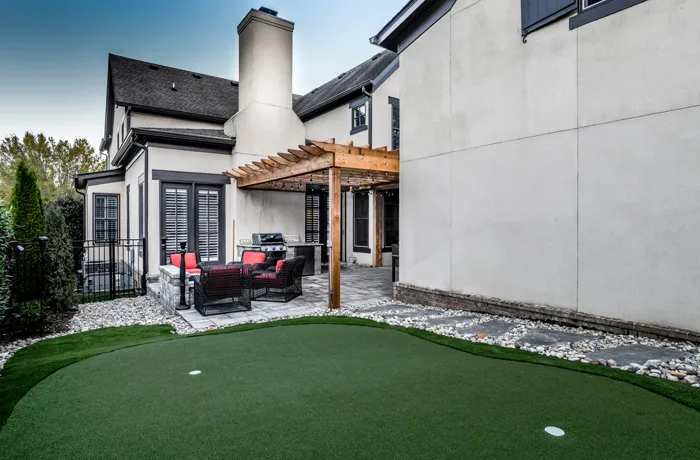
A pergola, an outdoor kitchen, a fire pit and an artificial putting green, all in one Westhaven yard in Franklin and all lit for use after dark. The pergola shelters the seating and grill against the house, and the green takes up the lawn in front of it.
It’s a fair picture of how these yards fill in: a structure first, then the things people want near it. The green has its own page under backyard putting greens, and the night lighting falls under exterior lighting.
How big should the patio under a pergola be?
Size it from the furniture out. A dining table needs room for chairs pushed back with someone walking behind them; a ring of chairs around a fire pit needs clear paver behind each seat. Green Scene’s entry-level patio package was 300 square feet, a useful yardstick when you’re picturing what fits.
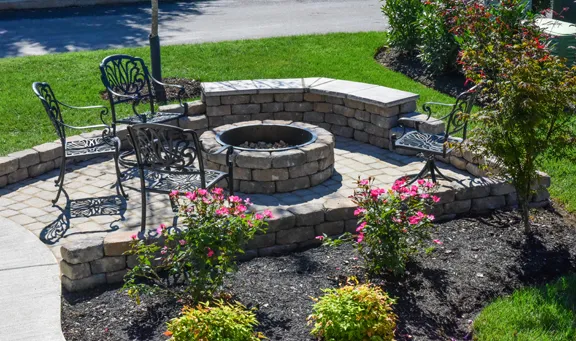
Curves stretch a small footprint. The round pit below sits inside a low curved seat wall, which gives a modest patio more seating than loose chairs would.
Who keeps you posted while it’s built?
Antonio Estrada handles customer service, and he keeps homeowners updated through construction and after it, so schedule questions and change requests go to one person. Teresa Garcia runs the scheduling from the office on Mealer Street in Franklin, the town she grew up in.